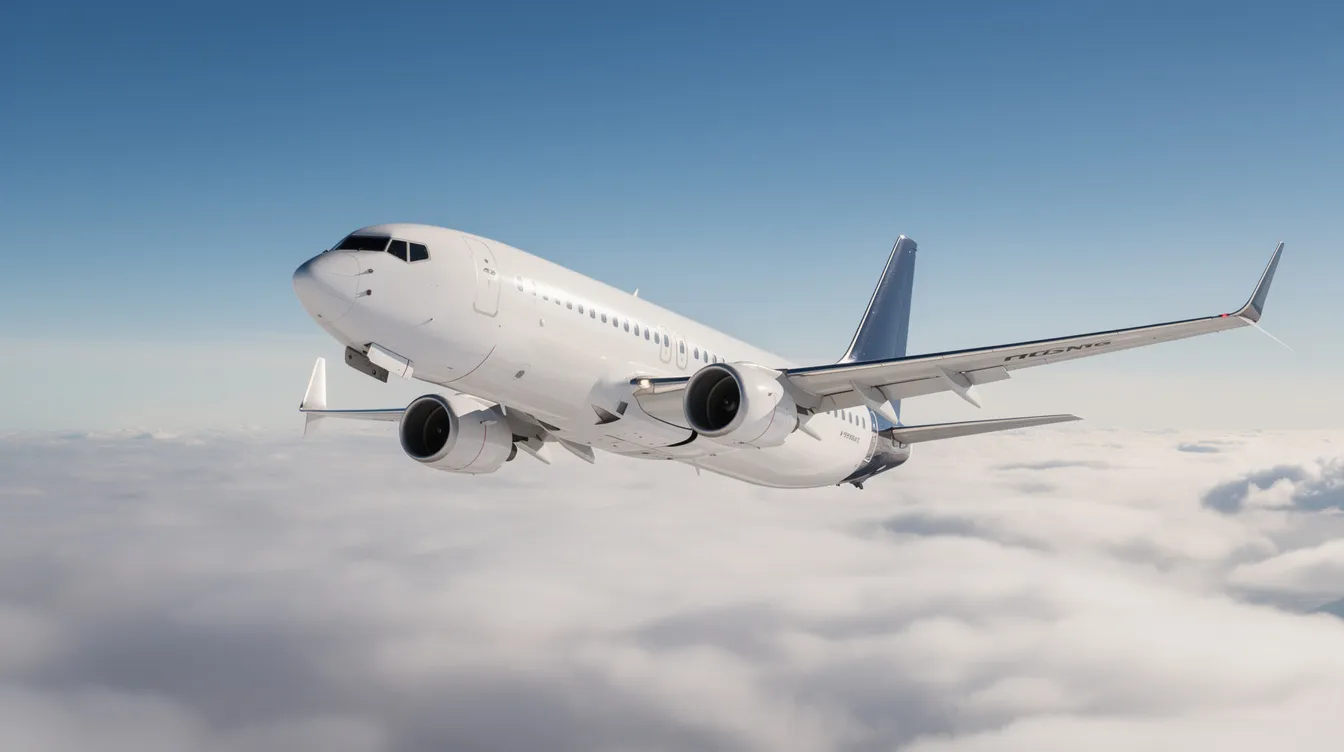
Understanding 737 operating costs is essential for airline managers, private jet buyers, business travelers, and anyone considering large-cabin aircraft access. This article provides a comprehensive breakdown of what it really costs to operate a Boeing 737, whether in airline service or as a Boeing Business Jet (BBJ). We’ll cover fixed and variable expenses, fuel, maintenance, and the economics of ownership versus access models like jet cards. By the end, you’ll be able to benchmark the total cost of flying a 737 and make informed budgeting or travel decisions.
Operating cost includes fuel, crew, maintenance, ownership, and airport charges. Knowing these details helps you understand the true financial commitment behind running one of aviation’s most iconic aircraft.
The Boeing 737 operating cost typically ranges from $5,000 to $8,500 per flight hour in airline service, while Boeing Business Jet variants can run $11,500 or more per hour because they fly fewer hours and support a more premium onboard experience.
The Boeing 737 is known for being one of the lowest-cost aircraft families in the single-aisle market, but “low cost” is relative. For frequent business travelers, high-net-worth flyers, corporate executives, and private jet users weighing large-cabin aircraft access, the real question is how those hourly costs change once you factor in fixed and variable expenses, fuel, maintenance, airline economics, and the tradeoff between full ownership and access models such as jet cards.
Here is what the numbers actually look like for airlines, private operators, and those considering alternatives,s so you can benchmark the total cost of flying a 737 and make a better budgeting or travel decision.
Answering The Core Question: How Much Does It Cost To Operate A Boeing 737?
Boeing 737 operating costs range from $5,000 to $8,500 per flight hour in airline service, depending on aircraft age, configuration, and fuel price. For a Boeing Business Jet variant flying fewer hours per year, all-in cost per hour climbs to $11,500 or more. Operating cost includes fuel, crew, maintenance, ownership, and airport charges; it does not refer to the purchase price alone.
Aircraft utilization affects cost per flight hour or per seat. A high-utilization airline 737 flying 3,000 to 4,000 hours per year spreads fixed expenses across many sectors, producing a lower per-hour figure. A BBJ flying 200 to 400 hours absorbs the same fixed burden across far fewer hours, which increases costs per hour and reshapes the total annual budget.
Boeing 737-800 variable operating cost: roughly $5,000 to $7,000 per flight hour in airline use
BBJ all-in cost (fixed plus variable) at 325 hours per year: approximately $11,570 per hour
Annual operating cost for a Boeing 737 is approximately $4.4 million at moderate utilization
Airline 737 annual budget (3,000+ hours, excluding acquisition): $15 million to $25 million
BBJ annual budget at 200 hours: about $2.4 million; at 400 hours: about $4.0 million
BlackJet helps clients interpret this data when they evaluate private access to large-cabin aircraft, without requiring them to own or manage a 737 or BBJ directly, and its premium private jet cards and jet card programs are designed to deliver that access efficiently.
Next, we’ll explore how these costs are structured and what factors drive them.
The Structure Of Aircraft Operating Costs For The Boeing 737
Operating costs of a Boeing 737 are split into direct and indirect costs. Direct operating expenses cover fuel, line maintenance, engine reserves, and crew flight pay. Indirect or fixed costs include leasing, financing, insurance, training, and administrative overhead. Both the 737 MAX and A320neo are competing at the same level of operational efficiency, which makes cost structure comparisons across narrowbody fleets relevant across the industry and the wider world of airline operations.
Cost per available seat-mile (CASM) accounts for operating cost and the number of seats. CASM is a key metric in airline economics, as it measures the cost to operate each seat for every mile flown, allowing for direct comparison between aircraft and configurations.
Here’s how the main cost categories break down:
Variable cost per flight hour: For a 737-800, approximately $6,279, according to HangarMath estimates and the kind of operating-cost report operators use to compare 737 cost categories.
Fuel: Accounts for roughly 20% to 40% of total operating costs. In many airline breakdowns, fuel represents 40% to 50% of direct operating expenses alone.
Maintenance reserves and engine programs make up another 30% to 40% of ground operating expenses.
CASM and seat-mile economics: Cost per available seat-mile (CASM) depends on passenger capacity. An airline 737-800 with 160 to 189 passengers spreads costs across far more seats than a BBJ with 20 to 40 VIP seats.
Seat-mile costs: Depend on passenger capacity, which is why the 737 family combines competitive fuel efficiency, high seat capacity, and low maintenance costs in airline production environments.
Fuel efficiency: Newer models like the 737 MAX improve fuel efficiency by 14% to 20% per seat compared to previous generations.
Next, we break down the fixed costs that remain constant regardless of flight hours.
Fixed Costs: The Price Of Keeping A Boeing 737 Ready To Fly
Fixed costs are incurred whether the aircraft flies zero hours or four hundred. For a Boeing Business Jet operating 200 hours per year, fixed cost per hour can exceed $6,000 before a single gallon of fuel is burned. Ownership costs include lease payments and capital depreciation, and hull and liability insurance premiums add to operating overhead on top of those.
Leasing: Leasing a new Boeing 737 MAX 8 averages around $400,000 per month. Boeing 737 MAX list prices range from $90 million to over $130 million, though transaction prices for the Boeing 737 can be 40% to 60% below list price. Used Boeing 737 prices range from $1.3 million to $60 million depending on aircraft age and configuration.
Crew expenses: Include salaries, training, and accommodations for flight and cabin crew. Guardian Jet estimates BBJ crew cost at roughly $819,000 per year for a 300-hour operation.
Hangar fees: At major airports, run $100,000 to $200,000 annually.
Insurance: (Hull plus liability) adds another $100,000 to $300,000 per year.
Annual fixed costs: For a BBJ at moderate utilization, the total is approximately $1.1 million per year, according to industry estimates.
Annual budget: A BBJ flying 200 hours runs about $2.4 million dollars per year in total; at 400 hours, about $4.1 million.
Spreading $1.1 million in fixed costs over 800 airline hours yields roughly $1,375 per hour. The same figure divided by 200 BBJ hours produces $5,500 per hour. This arithmetic alone explains why jet card programs that embed fixed costs into transparent hourly pricing appeal to operators and travelers who do not fly more than a few hundred hours per year. Understanding jet card pricing structures and benefits is critical when comparing them to outright 737 ownership.
Next, we’ll examine the variable costs that fluctuate with each flight hour.
Variable Costs Per Flight Hour: Fuel, Maintenance, Crew, and Fees
Variable expenses change with each hour flown or sector operated. These line items define the per-trip economics of any Boeing 737 mission profile and sit alongside broader private jet price list benchmarks across aircraft types when comparing 737-class travel to smaller jets.
Fuel
Fuel prices heavily influence operating costs of a Boeing 737. A 737 MAX 8 burns roughly 750 to 900 US gallons per hour at normal cruise speed, and many travelers ultimately compare these fuel-driven economics with the cheapest private jet options for entry-level flyers. At a 2025 to 2026 domestic jet fuel price of $2.50 to $3.50 per gallon, fuel cost runs $1,875 to $3,150 per flight hour. 737 MAX models claim about 20% less fuel consumption than previous 737 generations. Fuel burn varies by aircraft model and trip length; short flights incur relatively high fuel consumption during taxi, climb, and descent phases. A 20% spike in fuel price can add $400 to $600 per flight hour.
Maintenance
Maintenance costs include routine checks and engine restorations. Routine inspections are a predictable part of maintenance costs: A-checks occur every 400 to 600 flight hours; C-checks occur every 18 to 24 months, and some owners mitigate these obligations through leasing a private jet instead of full ownership. A C-check for a Boeing 737 costs $1.5 million to $2.5 million. Maintenance costs can reach several hundred dollars per flight hour, and high utilization reduces per-hour maintenance costs by spreading heavy checks over more hours. Delays and unscheduled maintenance can create additional costs beyond normal operating costs, a figure many operators underestimate.
Crew
Crew costs are the largest direct operating-cost category for U.S. passenger airlines. Crew expenses can range from several hundred to over one thousand dollars per flight hour. VIP BBJ operations may require dedicated cabin attendants, chefs, and sometimes security personnel, which pushes per-hour crew costs well above airline averages.
Fees
Landing fees and airport charges impact operating costs at every stop. Airport navigation fees vary by airport and region; a landing at JFK or Heathrow costs thousands of dollars for a 737-class aircraft based on weight, while a regional airport may charge a fraction of that. Ground handling adds $200 to $1,000 per sector.
Example Variable Cost Calculation
Cost Category | Per Hour | 4-Hour Total |
|---|
Fuel | $2,800 | $11,200 |
Maintenance | $1,500 | $6,000 |
Crew | $800 | $3,200 |
Fees/Handling | $500 | $2,000 |
Total | | $22,400 |
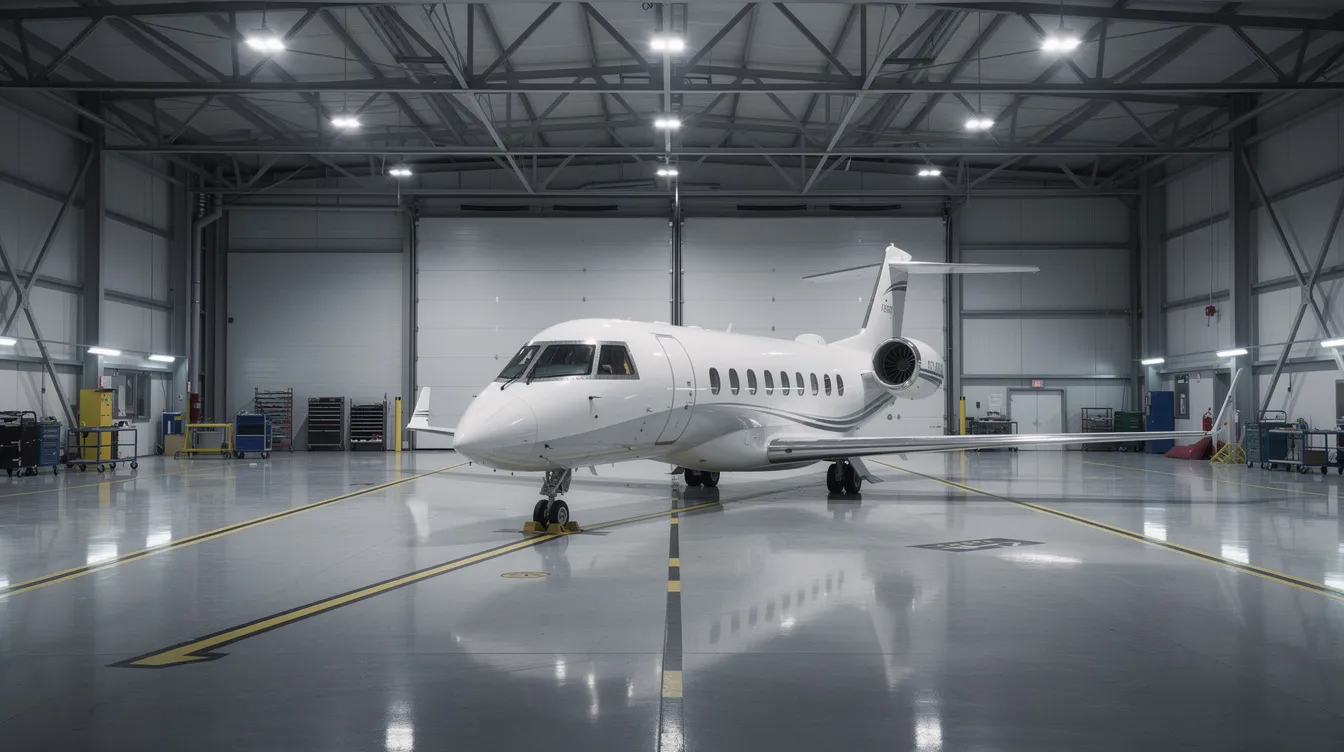
Next, we’ll compare the economics of Boeing Business Jet operations to those of airline 737s.
Boeing Business Jet (BBJ) Economics Versus Airline 737 Operations
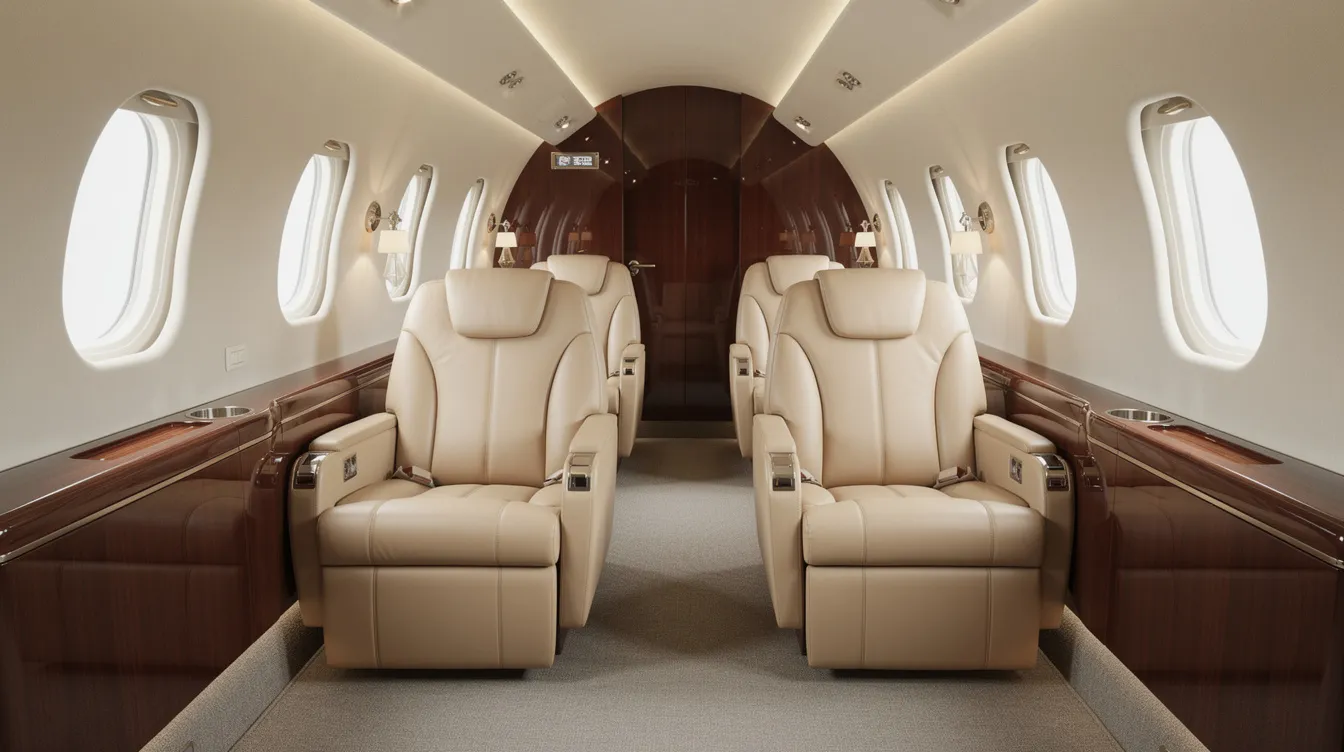
A Boeing Business Jet uses the same 737-700 or 737-800 airframe as commercial operators like United Airlines but reconfigures the cabin for 18 to 40 VIP passengers. This is similar to other large private jets designed for around 20 passengers, with auxiliary fuel tanks extending range for intercontinental missions. The first flight of the BBJ program dates to 1998, and the platform remains widely used by governments, corporations, and high net worth individuals worldwide.
Boeing Business Jets incur higher per-hour maintenance costs than airline 737s for several reasons, especially when they are configured as private jets for up to 50 passengers with bespoke interiors and mission profiles.
Lower annual utilization (200 to 400 hours vs. 3,000+ for low-cost carriers and full-service airlines) means fixed costs produce a larger per-hour burden.
Custom interiors: With more complex networks of entertainment, communications, and cabin management systems, maintenance labor and parts cost.
Dedicated crew structures : and premium service staff push mission-level expenses above airline baselines.
Annual operating cost: A BBJ flying 200 hours per year carries an annual operating cost near $2.4 million; at 400 hours, closer to $4.0 million, with per-mile costs dropping from roughly $28 to $23 as the aircraft logs more flight hours.
Consider a corporate roadshow or other charter scenarios moving around 100 passengers privately: a company's leadership team needs five cities in eight days across North America and Europe. Operating a dedicated BBJ for that itinerary involves positioning flights, crew hotels, landing fees at congested hubs, and catering for each sector. Those segments where the aircraft flies empty to reposition generate zero passenger value but full variable cost.
BlackJet clients can access long-range private jets or large-cabin jets for identical missions without carrying depreciation or managing more complex networks of vendors, crew scheduling, and compliance. This makes it easier to evaluate when chartering a private jet is worth it versus airline or BBJ ownership.
Next, we’ll look at how these cost insights inform private jet strategy and decision-making.
From Operating Cost To Strategy: Using 737 Data To Inform Private Jet Decisions
Understanding Boeing 737 and BBJ aircraft operating costs helps high net worth individuals and corporations benchmark the total cost of controlling a large aircraft each year, whether through outright purchase or leasing structures that spread private jet costs differently. Many assume the acquisition price dominates; in practice, the annual budget for fuel, maintenance, crew, insurance, and financing often exceeds the depreciation line within a few years of ownership.
Do you need 100+ seats, or does a 16-seat large-cabin jet cover 90% of your missions — or even one of the best small private aircraft for shorter, leaner trips?
At fewer than 200 hours per year, ownership of a 737-class aircraft produces fixed cost per hour above $6,000 before fuel. Flight planning around a jet card eliminates that burden entirely, especially when you compare different jet card programs for frequent flyers.
BlackJet's model provides predictable hourly pricing across cabin classes with safety-vetted operators certified under Part 135 or equivalent standards through its 25+ Hour Jet Card solutions for mid-, super-mid, and large-cabin jets.
BlackJet ensures flights are carbon-neutral at no extra cost, addressing environmental considerations that legacy 737 operations handle inconsistently.
Scenario: an executive flying from New York to Los Angeles once per month (roughly 120 hours per year roundtrip), evaluating whether chartering private jets is worth the premium over commercial business class. Owning a BBJ for that mission costs over $2.4 million annually. Chartering a large-cabin jet through BlackJet for the same routes eliminates hangar, insurance, crew salary, and depreciation while delivering comparable cabin service and uncompromising safety standards. Some travelers may go further by buying individual seats on shared private flights when they don’t need the whole aircraft.
Next, we’ll discuss how to plan your aviation spend and compare the total cost of access.
Planning Your Aviation Spend: Annual Budgeting And Total Cost Of Access With BlackJet
Boeing 737 operating cost data provides a useful ceiling for what large-aircraft travel can cost. For most private travelers, the question is not "Can I afford a 737?" but "What total annual budget delivers the access I need?"
Estimate total hours: 25, 50, or 100+ hours per year, then compare 737-class access against the most affordable private aircraft and entry-level options.
Match mission profile to aircraft: Light jets for short hops, super-midsize for coast-to-coast, large-cabin for transatlantic; no need to default to BBJ-class weight and cost when large private jets for 20 passengers already cover most group missions efficiently.
Jet card model: BlackJet's jet card model bundles crew, maintenance, insurance, and ground fees into a single hourly rate, removing the separate line items that make 737 ownership budgeting so complex and making it easier to compare against NetJets jet card costs and structures.
Sustainability: Every BlackJet flight is carbon-neutral by default, a differentiator in an industry where sustainability remains optional for most private 737 operators and where private jet rideshare models are emerging as another way to cut emissions per passenger.
Digital booking: Digital booking and real-time support let clients manage spend proactively rather than reconciling invoices months after the fact.
Next, we’ll summarize the key takeaways on Boeing 737 operating costs.
Key Takeaways On Boeing 737 Operating Costs
Hourly Operating Cost Range
Boeing 737 operating costs: Can reach $5,000 to $8,500 per flight hour in airline service; BBJ variants run $11,500 to $12,500 per hour at low utilization.
Impact of Fixed Costs
Fixed costs (Leasing, crew salaries, insurance, hangar) drive per-hour cost when annual hours are low; a BBJ at 200 hours absorbs over $5,500 per hour in fixed costs alone.
Direct Operating Expenses
BBJ vs Airline Economics
Private Jet Access Alternatives
BlackJet offers premier private jet access across multiple aircraft types without clients bearing the full operating cost of owning a 737. The model combines rigorous safety certification, transparent pricing, and carbon-neutral flying to deliver a modern alternative to fleet ownership, comparable in quality to top private jet companies known for luxury and service.
Discover how BlackJet can reshape your travel strategy without the burden of airline-scale operating costs, whether through curated private jets for sale in markets like the UK or scalable large-group charter solutions for 100-passenger missions.
Conclusion: Understanding the True Cost and Strategic Value of Boeing 737 Operations
Operating a Boeing 737, whether as part of a commercial airline fleet or a bespoke Boeing Business Jet, involves a complex interplay of fixed and variable costs shaped by utilization, configuration, and mission profile. While the aircraft is celebrated for its fuel efficiency, high seat capacity, and relatively low maintenance costs in commercial operations, the economics shift significantly in private or low-utilization settings where fixed costs dominate.
For high-net-worth individuals and corporate executives, owning or leasing a 737-class aircraft requires careful consideration of not only the acquisition price but also the ongoing expenses of fuel, crew, maintenance, insurance, and airport fees. These costs can exceed $11,000 per flight hour for BBJ variants, underscoring why many travelers and businesses prefer access models like BlackJet’s premium jet card programs. These programs offer seamless, cost-effective entry to large-cabin jets without the burden of ownership, combining safety-certified operators, carbon-neutral flights, and digital booking tools.
By benchmarking Boeing 737 operating costs against mission needs, travelers can make informed decisions that balance luxury, flexibility, and financial prudence. Whether it’s a corporate roadshow requiring privacy and range or a frequent business traveler seeking reliable transcontinental access, understanding these cost dynamics empowers smarter aviation strategy.
Explore how BlackJet’s curated fleet and transparent pricing can elevate your travel experience, delivering the prestige and operational excellence of a Boeing 737 without the complexities of direct ownership. Discover a new standard in private jet access that aligns with your lifestyle and business goals.


 Sign up with google
 Sign up with Apple