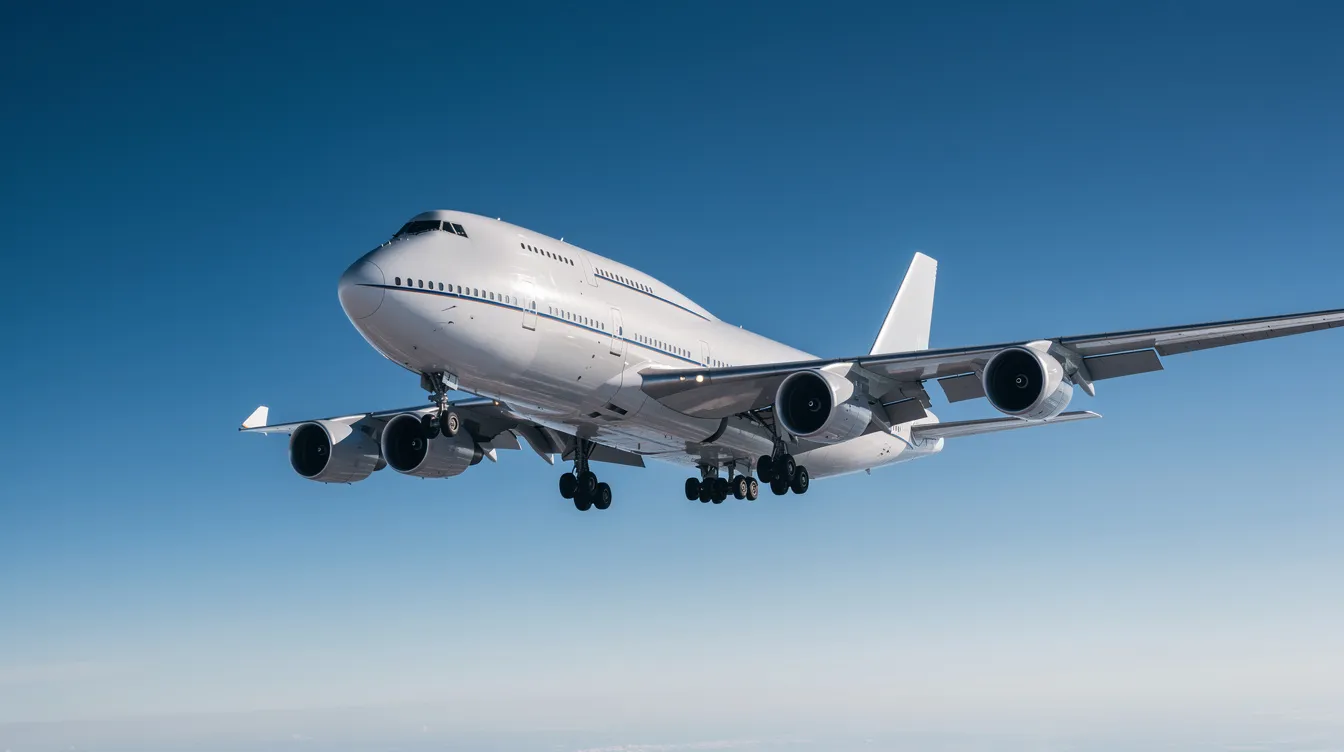
The Airbus ACJ380 is the world’s largest private jet concept: a reimagined Airbus A380 fitted with marble-clad suites, private offices, and even a full-size gym to create a flying palace for heads of state, royal families, sovereign delegations, and other ultra-high-net-worth travelers who need secure, nonstop global reach for large groups. For BlackJet members and anyone weighing whether an ultra-VIP airliner belongs in the conversation at all, the ACJ380 remains the clearest example of private aviation at its absolute upper limit.
This guide examines the ACJ380’s design, specifications, cabin features, technology, safety systems, operating requirements, pricing, and mission fit, then compares it with other private jets and the environmental tradeoffs that come with an aircraft of this scale. Understanding where the ACJ380 excels—and where it is excessive—helps travelers and advisors choose the right aircraft for each trip, which is exactly where BlackJet’s guidance matters most.
Airbus ACJ380 at a Glance
The ACJ380 takes the A380's full-length double-deck design and reimagines it as a flying palace for heads of state, royal families, and sovereign delegations requiring secure, non-stop global travel. This is not simply a luxury toy — it is a strategic asset capable of serving as an airborne command center, diplomatic suite, and VIP residence simultaneously, and it frequently appears alongside contenders in rankings of the top 10 best private jets in the world.
Here are the headline numbers:
Cabin space: approximately 550 square meters (~6,000 sq ft) across two full decks - nearly double the cabin space of competitors in the VIP airliner category
Passenger capacity: up to 80 passengers in a custom layout, or around 50 in ultra-spacious VIP configuration
Flight range: up to 17,250 km (over 9,300 nautical miles), enabling roughly 20 hours of flight without refueling
Cruise speed: Mach 0.85, or a high-speed cruise of 488 knots (about 561 mph / 900 km/h)
Service ceiling: 43,000 feet
Engines: four Rolls-Royce Trent 900 turbofans
BlackJet does not operate ACJ380s within our Jet Card fleet — few entities on earth do. However, as a company, we advise members on when a VIP airliner like the Airbus ACJ380 (or smaller Airbus Corporate Jets in the ACJ family) makes strategic sense versus traditional business jets, and we can coordinate access through specialist partners when the mission demands it.
From A380 Icon to Airbus ACJ380 "Flying Palace"
The story of the ACJ380 begins with the commercial A380 programme. Airbus launched development in December 2000, achieved its first flight on 27 April 2005 in Toulouse, and entered revenue service with Singapore Airlines in October 2007. The A380 was designed to maximize passenger capacity between congested hub airports, and airlines quickly utilized the extra space for luxury amenities such as onboard lounges and bars.
Airbus Corporate Jets - the company's dedicated line for private aircraft and government aircraft - saw potential in the platform. The ACJ380 concept extended the ACJ family to the largest wide-body airframe available, and Airbus was positioning it at the same ultra-luxury end of the market as Boeing VIP aircraft, targeting sovereign and ultra-high-net-worth customers who needed an incredibly spacious airborne headquarters.
Key historical milestones:
2007 Dubai Airshow: Prince Alwaleed bin Talal placed the only firm order for a VIP A380, quickly nicknamed the flying palace. Proposals for this aircraft included three-deck layouts, marble bathrooms, a prayer room, a concert hall, and even a garage for a Rolls-Royce.
2013–2015: The order stalled. The aircraft (MSN2) sat in Airbus facilities in Toulouse without a completed VIP interior and was eventually cancelled and removed from the books by early 2015.
2021: Airbus ended production of the A380 entirely, with the last delivery going to Emirates. No ACJ380 was ever delivered in VVIP private configuration.
Only a handful of A380s have been earmarked for VIP or governmental completion, making the ACJ380 one of the rarest - and most aspirational - private jets on earth.
Key Specifications of the Airbus ACJ380
Understanding all the details of this plane requires looking at numbers that dwarf every other aircraft in private aviation, which also puts into perspective the full spectrum of private jet sizes and cabin categories.
Dimensions
Parameter | Value |
|---|
Overall length | ~72.7 m (238 ft 6 in) |
Wingspan | 79.8 meters (~262 ft) |
Overall height | ~24.1 m (79 ft 1 in) |
Cabin length (main deck) | ~44.9 m |
Cabin length (upper deck) | ~43.9 m |
Cabin width (main / upper) | ~6.54 m / ~6.80 m |
Cabin height | 2.33 meters per deck |
Performance
The A380 operates at cruising speeds of approximately Mach 0.85, translating to a high-speed cruise of 488 knots. In VIP configuration, the ACJ380 has a maximum range of 17,250 km - enough to connect Riyadh to Washington, D.C. or Dubai to Los Angeles without a fuel stop. The aircraft can fly for approximately 20 hours without refueling, reaching a service ceiling of 43,000 feet.
Powerplant and Structure
The ACJ380 features four turbofan engines - specifically, four Rolls-Royce Trent 900 units or the Engine Alliance GP7200 alternative, each producing roughly 70,000 lbf of thrust. This four-engine configuration provides redundancy that few other aircraft can match on ultra-long private flight missions. The Airbus A380 is engineered with a high-efficiency supercritical wing spanning nearly 80 meters, contributing to both fuel economy and the A380's praised smooth ride due to its size and engineering.
The Airbus A380 has a maximum takeoff weight of 575 tonnes. In its commercial airline form, the A380 is capable of a maximum certified seating capacity of 853 passengers, with a typical seating configuration allowing for 400 to 550 passengers. The A380 can travel a range of 8,000 nautical miles (14,800 km) in standard airline configuration; the VIP layout's reduced weight pushes that flight range significantly further.
The ACJ380 Cabin: Designing a Two-Deck Flying Palace
Step inside the ACJ380, and the sheer size becomes visceral. The main elements of the cabin design start with volume, layout flexibility, and passenger comfort: roughly 305 m² on the main deck plus 249 m² on the upper deck give designers approximately 550 square meters of usable interior space, or nearly 6,000 square feet. This is not an exaggeration: the ACJ380 offers nearly double the cabin space of any competing VIP airliner.
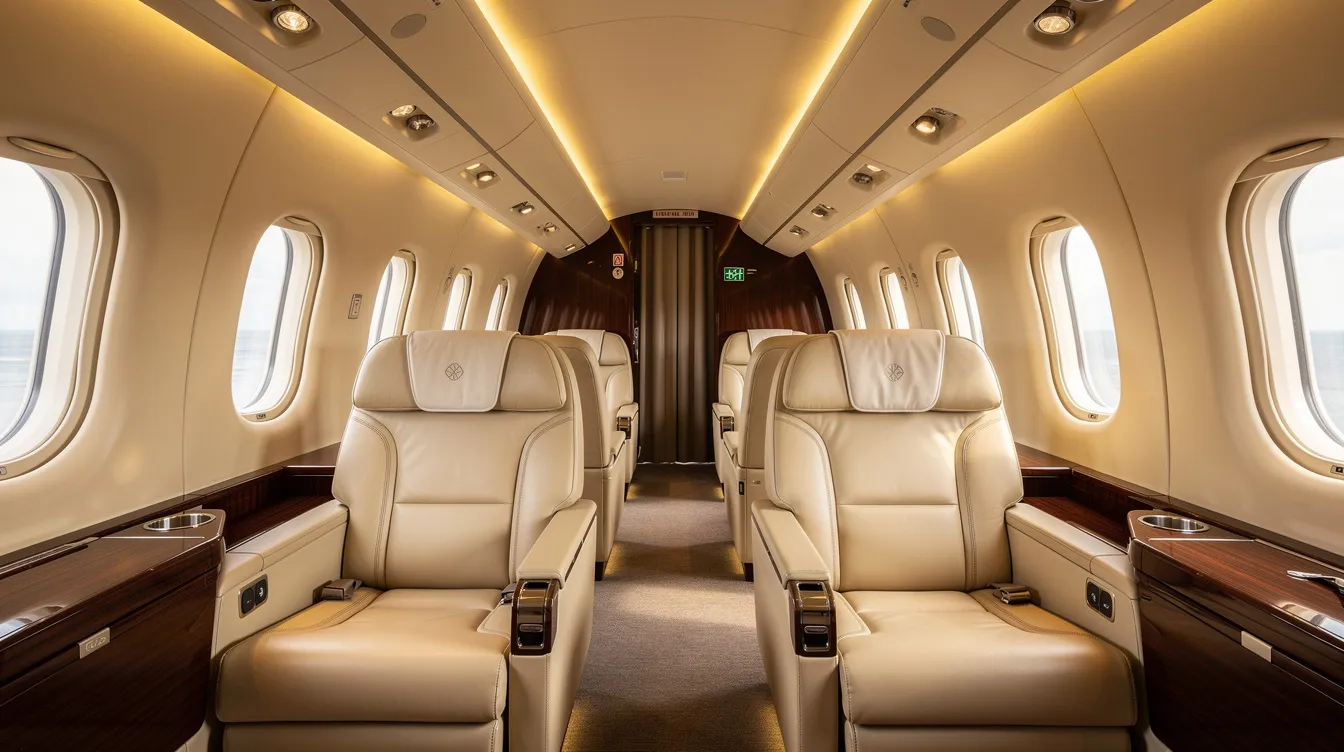
Typical VIP Layout Zones
The double-deck configuration allows functional separation that no single-deck private jet can replicate, even when compared with the most capable private jets for 50 passengers or the best small private aircraft for focused missions:
Master suite with en-suite bathroom, walk-in wardrobe, and private office
Guest bedrooms where delegation members or family can be comfortably accommodated
Conference rooms equipped for secure satellite communications
Formal dining area seating 12–16 guests
Lounge and entertainment zone with cinema capabilities
Private gym, spa, or wellness area
Dedicated crew rest quarters and galley on a separate level
Generous luggage compartment capacity below both decks
The cabin features bespoke interiors with master suites and private gyms - amenities that the "flying palace" proposals by Prince Alwaleed bin Talal pushed to extremes with marble bathrooms and car garages. Some of these concepts stayed purely conceptual, but they illustrate all the wishes that a platform of this scale can theoretically fulfill.
Comfort Technology
Of particular note is the ACJ380's comfort engineering. The aircraft includes advanced noise insulation for a peaceful journey - the A380's design allows for a significantly quieter cabin than older jets, making it an exceptionally quiet cabin environment even on 15-hour sectors. It has a unique air conditioning system refreshing cabin air every two minutes and a unique cabin lighting system using full-spectrum LEDs that adjust for circadian rhythm on ultra-long-haul flights, reducing jet lag for passengers.
Technology, Safety, and All the Nuances of Operating an ACJ380
The ACJ380 inherits the A380's airline-grade technology stack, which represents decades of successful work in commercial aviation safety.
Avionics and Flight Systems
The A380 includes advanced avionics and fly-by-wire systems, managed through a full glass cockpit with eight large displays. Flight information is presented to pilots through integrated flight management computers, and all flight-control inputs pass through triple-redundant electronic channels—there are no mechanical linkages between the sidestick and control surfaces.
Safety Systems
A collision avoidance system (TCAS II) monitors surrounding air traffic and commands evasive maneuvers when necessary, providing automatic flight path adjustments that the autopilot executes without pilot input
The Brake-to-Vacate system performs automatic braking depending on a selected runway exit, optimizing deceleration so the aircraft vacates the runway efficiently - a system that also prevents rollovers during aggressive braking scenarios
Multiple redundant hydraulic, electrical, and flight-control systems ensure that no single failure compromises safety
Operational Nuances
Airports require specialized infrastructure for the A380 due to its size. Runways of approximately 3,000 meters are needed for takeoff, specific gate widths must accommodate the 80-meter wingspan, and reinforced taxiways must support 575 tonnes. This limits the ACJ380 to large international airports - a significant operational constraint compared to smaller private aircraft.
At BlackJet, we hold every operator in our network to rigorous third-party safety certification standards, including Wyvern and ARGUS ratings. Whether the aircraft is a light jet or a VIP airliner, our safety protocols remain non-negotiable.
Airbus ACJ380 vs Other Airbus Corporate Jets and Business Jets
The ACJ380 sits at the extreme end of a spectrum. Understanding where it falls relative to other aircraft helps clarify when it makes practical sense - and when it does not.
Aircraft | Cabin Area | Typical VIP Pax | Range | Airport Access |
|---|
ACJ380 | ~550 m² | 50–80 | ~17,250 km | Major hubs only |
ACJ350 | ~270 m² | 25–40 | ~20,000 km | Large airports |
ACJ330neo | ~200–250 m² | 20–35 | ~17,500 km | Large airports |
ACJ320neo | ~75 m² | 8–19 | ~11,100 km | Most airports |
Gulfstream G700 | ~55 m² | 13–19 | ~13,890 km | Most airports |
Global 7500 | ~53 m² | 13–19 | ~14,260 km | Most airports |
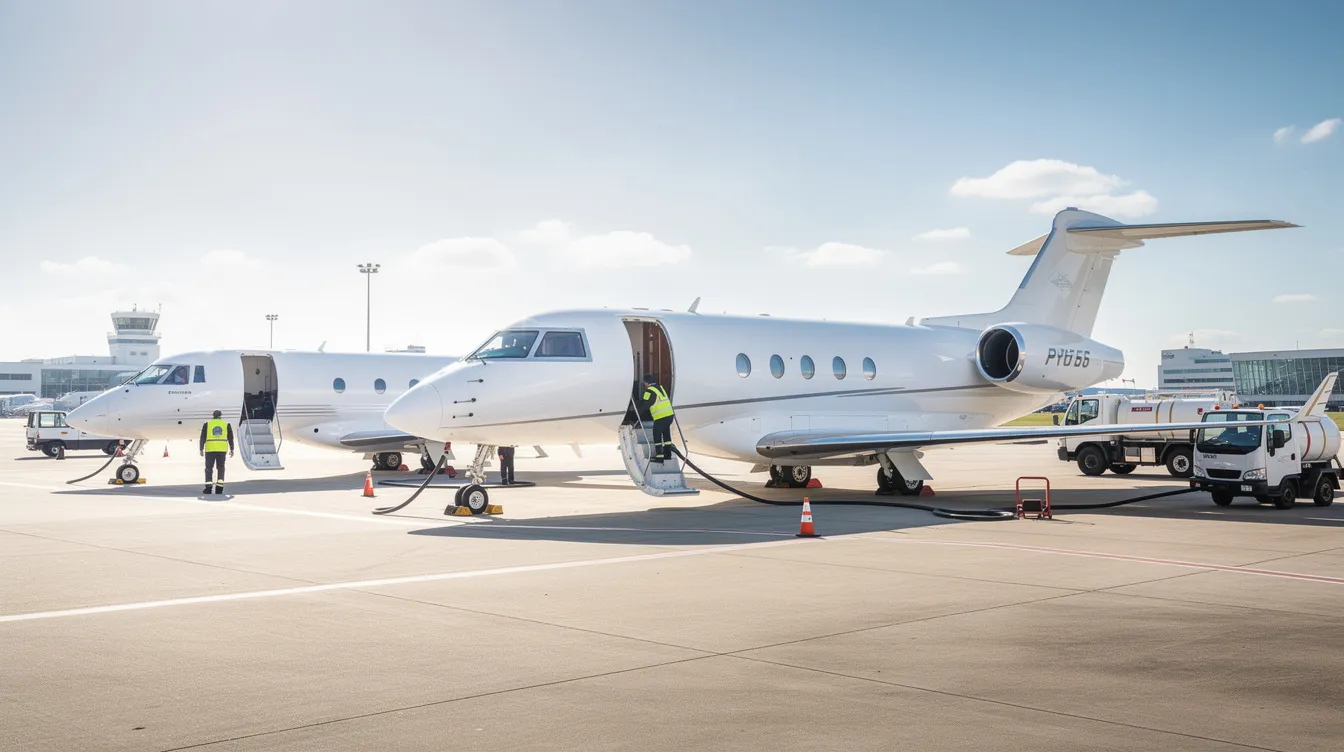
The trade-offs are clear. A 10-person executive team flying from New York to London gains nothing from an ACJ380's scale - a large-cabin business jet or even a super-midsize provides the right cabin space, range, and cost profile. But a 20- to 30-person board or project team may be better served by aircraft in the category of the best private jet for 20 passengers, while a 50-person sovereign delegation conducting a multi-continent diplomatic tour with secure communications, press briefings, and sleeping quarters is where a VIP airliner like the ACJ380 justifies its existence.
Airlines increasingly favor smaller twin-engine aircraft for long-haul routes over larger jets like the A380, and the same logic applies in business aviation. In most cases, BlackJet members are best served by long-range private jets or large-cabin aircraft, with the flexibility to access thousands of airports worldwide rather than the handful that can host an A380, which is why understanding the full landscape of types of private jets for every traveler is so important.
Who the Airbus ACJ380 Really Serves
The ACJ380's core clientele occupies an extraordinarily narrow segment, overlapping in some cases with travelers who might otherwise consider private jets for up to 50 passengers:
Heads of state and royal families requiring airborne command centers with secure communications, dedicated staff quarters, and protocol-compliant reception areas, similar to the ultra-luxury Saudi prince private plane configurations
Sovereign wealth delegations and multinational boards conducting a large number of multi-stop tours
Touring artists, sports teams, or media organizations needing high-capacity, high-security private transport across continents
Private individuals with budgets exceeding half a billion dollars and specific multi-deck lifestyle requirements
Mission Scenario
Consider a government delegation conducting a 15-hour non-stop flight from Riyadh to Washington, D.C. The aircraft stays configured as a mobile office: the upper deck houses a secure situation room and conference facilities, while the main deck provides sleeping quarters for 40 staff, a press briefing room, and a medical station. Flight route clearance and diplomatic coordination happen in real-time via encrypted satellite links. No other aircraft in the world can provide this combination of space, range, and security.
For the typical BlackJet member - 2 to 12 travelers on frequent business or leisure trips - the ACJ380 is dramatically over-scaled. A Jet Card program with access to right-sized aircraft delivers the same privacy, schedule control, and VIP terminals experience at a fraction of the cost and complexity, as outlined in our overview of premium private jet cards and Jet Card programs.
Charter Cost, Ownership Economics, and Empty Legs
Operating an ACJ380 involves economics that test even the deepest pockets.
Acquisition and Completion
Converting a green A380 airframe into a finished VIP palace was estimated at upwards of €370 million in period proposals. Combined with the base aircraft price, the total project easily exceeds $500 million. Even after completion, finding a buyer is extraordinarily difficult — ultra-customized VIP widebodies have tiny resale pools, and the best price rarely reflects original investment, which stands in stark contrast to more liquid markets like premium private jets for sale in the UK.
Charter Economics
For those who do not wish to own, charter rates for VIP airliners of this scale range from $30,000 to $42,000 per flight hour. Pricing depends on route, season, and repositioning costs. Most quotes include occupied flight hours and additional fees for crew, airport fees, catering, and ground handling. Charter pricing varies based on aircraft configuration and crew size, fitting into the broader picture of private jet price list costs and options.
Why Governments Dominate
A380 operators face high operating costs due to the need for many passengers to break even. Fixed costs - maintenance, parking, minimum crew, training, insurance - are enormous. This is why most VIP A380-class aircraft are government-operated rather than held by private individuals or an air broker.
Empty Legs and Alternatives
Empty-leg flights can reduce costs by up to 70%, but for an aircraft of this size, schedule and routing constraints make such opportunities exceedingly rare. BlackJet focuses on matching members with right-sized aircraft where empty-leg savings and flexible booking conditions are far more practical. Our premium Jet Card options provide customers with transparent, predictable pricing aligned with the core principles of understanding Jet Card cost per hour without the volatility of VIP airliner economics.
Airbus ACJ380 Cabin Experience vs Commercial First Class
Even the most celebrated commercial first-class products - think Emirates' A380 First Class suites with onboard showers - share the cabin, schedule, and airport experience with hundreds of other passengers. The ACJ380 eliminates every one of those compromises, delivering the kind of luxurious private jet Airbus A380 experience that effectively turns the aircraft into a flying palace.
Key Differences
Factor | Commercial A380 First Class | ACJ380 VIP |
|---|
Privacy | Shared cabin, 12–14 suites | Full-floor private suites |
Schedule | Airline timetable | Departure on your terms |
Security | Standard airport screening | VIP terminals, private screening |
Cabin customization | Fixed configuration | Fully bespoke to all the wishes of the owner |
Boarding time | 60–90 min pre-departure | 15 min or less |
Connection risk | Layovers possible | Non-stop flight route, any city pair |
The time savings alone are significant. A commercial itinerary from London to Sydney involves connections, layovers, and security queues that can add 8–12 hours to total travel time. An ACJ380 configured for a direct mission — or a BlackJet-sourced charter jet on a more practical scale — removes that friction entirely.
Sustainability and the ACJ380 in a Carbon-Conscious Era
Operating a four-engine, very-large private jet for a small group raises legitimate environmental questions. A lightly loaded ACJ380 burning through 320,000 litres of fuel produces substantial absolute emissions. Per-passenger efficiency only improves when the aircraft carries closer to its 50–80 passenger VIP capacity - a threshold most private operators rarely hit.
Some governments mitigate impact through sustainable aviation fuel (SAF) blending and carbon offset programs, though SAF availability remains limited at many airports. The latest developments in other technological innovations - including next-generation twin-engine widebodies - offer lower fuel burn per seat-mile meaningfully.
At BlackJet, every flight is carbon-neutral through verified offsets at no extra cost to members. Our flight advisors encourage selecting the most efficient aircraft category that meets cabin and range needs, which in most cases means a twin-engine business jet rather than a quad-engine airliner. Learn more about our approach to green private aviation.
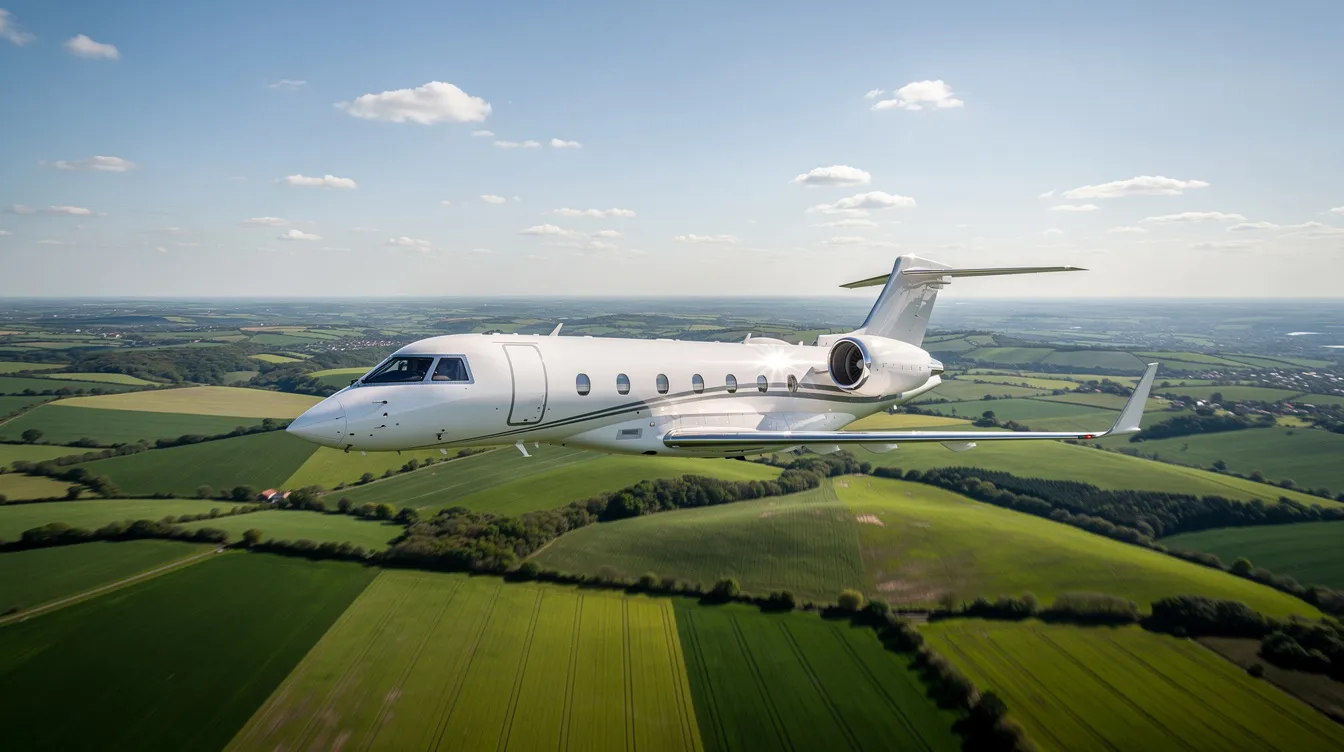
How BlackJet Helps You Choose the Right Aircraft (Beyond the ACJ380)
The Airbus ACJ380 represents the absolute ceiling of what private aviation can achieve - an aircraft so large it redefines the concept of flight itself. But for the vast majority of private travelers, the smartest strategy is matching aircraft to mission, not defaulting to the biggest plane in the world.
BlackJet's core value lies in exactly that calibration. Through our Jet Card programs and on-demand charter service, members gain 24/7 digital access to instant trip requests and real-time support across every cabin category — light, midsize, super-midsize, and large-cabin — similar to the options compared in our guide to the best Jet Cards for frequent flyers. Our flight specialists interpret each trip profile to recommend the aircraft with the right range, cabin layout, and cost profile. An eight-person executive team flying from New York to Dubai overnight does not need a company's office in the sky spanning two decks; they need a large-cabin jet with lie-flat seating, reliable Wi-Fi, and a flight crew held to the highest safety standards.
Whether you are exploring detailed information on other aircraft categories, comparing the best jet card programs, evaluating whether a 100-hour jet card cost structure or a more modest 50-hour jet card option fits your flying pattern, or simply curious about how private aviation can provide customers with a strategic advantage, BlackJet is built to guide that decision with precision.
Discover how BlackJet can reshape your travel. Explore our Jet Card membership and secure consistent, carbon-neutral private jet access - without the complexity of owning a flying palace.


 Sign up with google
 Sign up with Apple