
Bush flying represents the rawest, most visceral form of aviation still practiced today. For private travelers who refuse to let geography dictate their itinerary, it is the final frontier — the bridge between a polished midsize jet and a gravel bar deep in the wilderness. Here is what that world looks like, how it works, and how BlackJet connects the two.
What Is Bush Flying, Why It Captivates Private Aviators, and the Role of Videos?
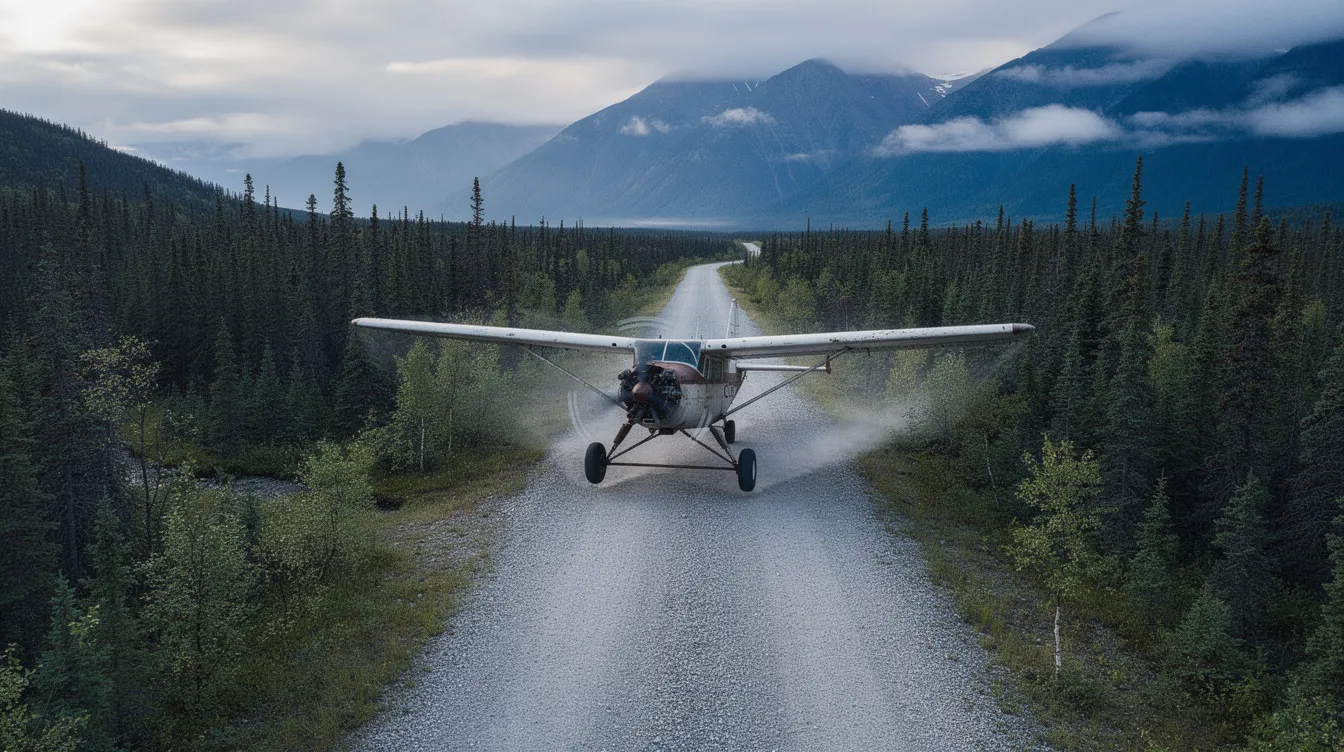
It is June 2027, and a single-engine turboprop lifts off a rain-slicked regional strip in northern British Columbia. Within minutes, the pilot is threading between ridgelines, clouds clinging to granite shoulders on both sides, visibility contracting and expanding like a living thing. Forty-five minutes of carving through mountain weather — constant adjustments to heading, altitude, power — until a gap in the forest materializes below: a gravel-and-grass strip barely 30 feet wide, flanked by mature spruce. The approach is steep, almost theatrical. Full flaps, airspeed bleeding toward the bottom of the green arc, wings rocking in the gusts. The wheels touch gravel, spray of stones, hard braking, and the aircraft stops well short of a logging road that marks the runway's end. Over the headset, a voice: "Tight confines, good job."
That sequence — contraction, precision, arrival — is bush flying distilled into a single landing.
Bush flying involves operating small aircraft in remote, rugged areas where conventional aviation infrastructure simply does not exist. Instead of paved runways and control towers, bush pilots land on unprepared surfaces like gravel bars, grass fields, frozen lakes, and narrow canyon airstrips across Alaska, the Yukon, northern British Columbia, Idaho, and Utah's red-rock canyonlands.
This is conceptually different from commercial flying, which relies on scheduled, structured routes between major hubs. It is also a world apart from standard private jet operations - polished FBOs, long runways, instrument approaches — though private jets offer luxury and convenience for travelers on the trunk legs of a journey.
Why the surge in interest? Popular bush flying videos have made backcountry aviation visible to millions. Hardcore canyon flying in Utah, cockpit POV clips of short-field landings on gravel bars, floatplane departures from mirror-still Alaskan lakes - these social clips circulate widely on platforms like Facebook and YouTube. Many BlackJet clients first discover backcountry aviation after watching a friend share one of these cockpit perspectives on a Friday evening. The footage is raw, unedited, and undeniably fun. It plants a seed.
What does it unlock? Bush flying offers unique flying experiences and access to remote wilderness that is simply unreachable via commercial routes. Remote fishing lodges, heli-ski bases, hunting camps, and ultra-private retreats often sit hours from the nearest paved airport. For high-net-worth and executive travelers, a bush plane is the only practical door to these places.
Beyond adventure: Bush flying also supports isolated communities by transporting essential supplies - fuel, food, medical equipment — into areas with no road access. It is utilitarian as much as it is aspirational.
BlackJet's role: While our Jet Card programs focus on certified business jets and turboprops across multiple cabin classes, we frequently coordinate the "last mile" to remote destinations via trusted bush operators. The itinerary is seamless: one booking, coordinated timing, and safety standards that mirror our primary fleet. Jet card programs offer 24/7 digital booking tools, and that same infrastructure manages the bush segment logistics so the client never has to juggle separate operators.
Aircraft, Techniques, and Safety in Modern Bush Flying
The machines that make backcountry access possible are purpose-built for punishment. Bush flying requires specialized aircraft designed for short takeoff and landing on surfaces that would destroy a conventional light plane. Here is a look at the hardware, the craft, and the culture that holds it all together.
Aircraft Types
There is no single "bush plane" — the category spans decades of design philosophy. Among the most common types of bush planes:
Cessna 180 and 185 Skywagon (1960s–1980s era, still widely flown): The 185, with roughly 300 horsepower and a useful payload of about 600 lbs, remains a workhorse for both float and wheel operations across Alaska and northern Canada.
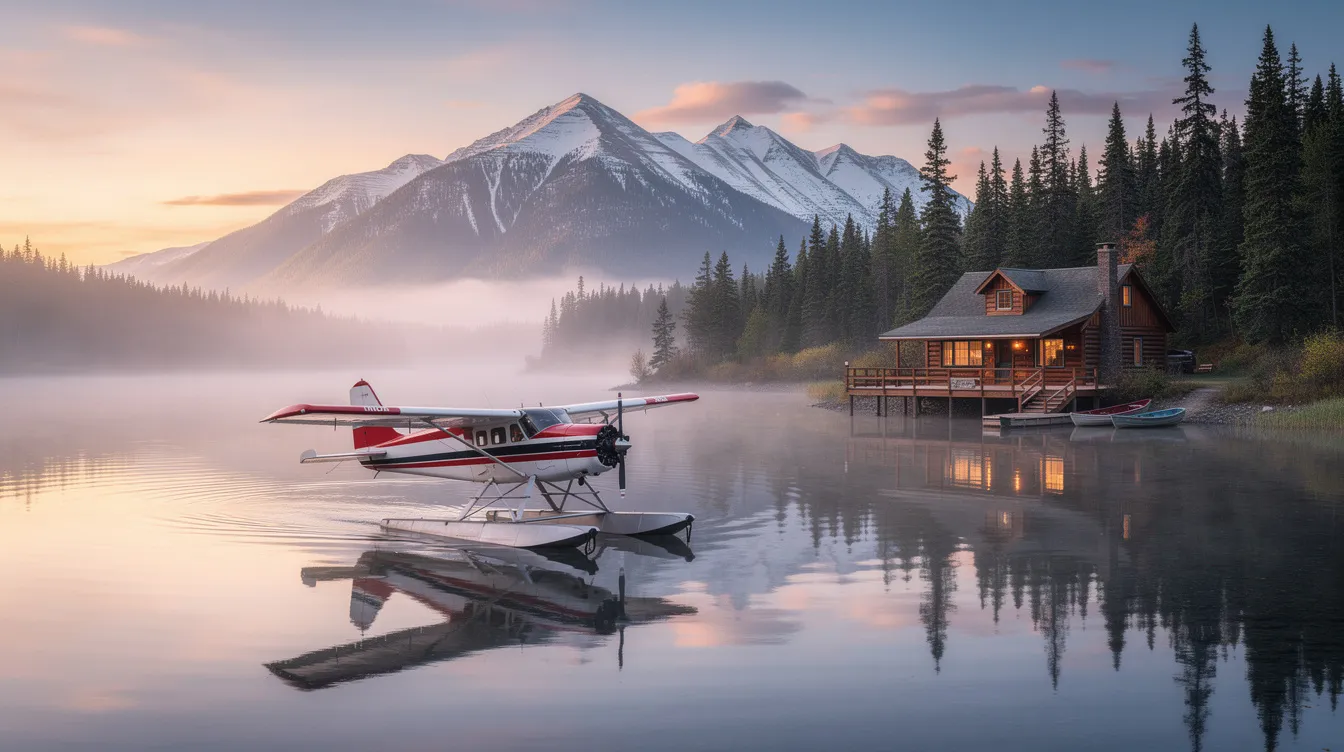
De Havilland DHC-2 Beaver: A radial-engine legend in service since 1947, capable of hauling 1,000 to 1,200 lbs on floats or wheels. Float planes like the Beaver can take off and land on water, making lakeside lodges accessible in minutes rather than days.
Modern STOL taildraggers: Aircraft like the Carbon Cub FX-3 (~186 hp) and Aviat Husky dominate canyon country — Utah, Idaho - where strips are short, narrow, and hemmed by rock walls. These are the planes you see in those viral cockpit videos.
Turboprop utility types: The Kodiak 100 (~750 shp) and de Havilland Twin Otter handle larger groups and heavier loads for bigger lodge operations. (aerocorner.com)
For comparison, the Cirrus SR22 is a popular single-engine aircraft in general aviation, but its fixed tricycle gear and lower ground clearance make it poorly suited for the rough terrain that bush planes are designed to handle.
Key Modifications
What separates a bush plane from a standard light aircraft is the modification package:
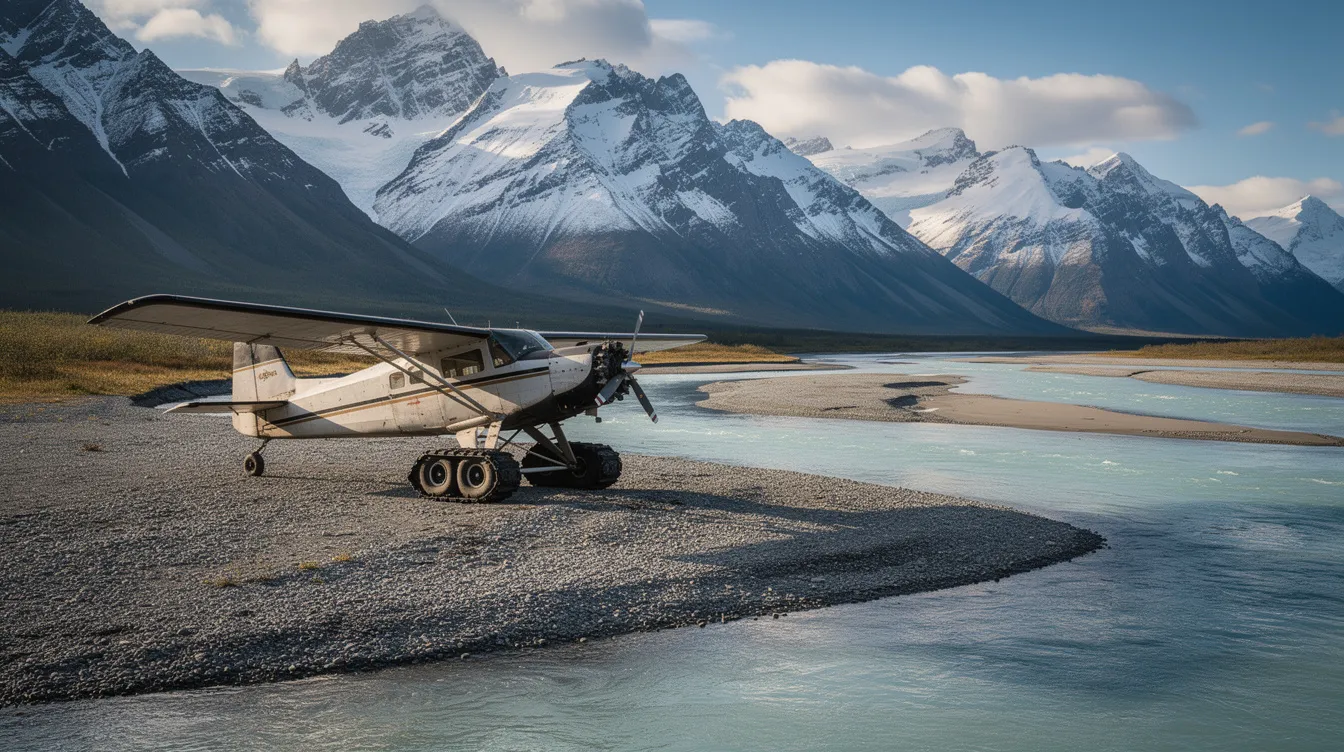
Oversized tundra tires - sometimes 29 inches or larger - absorb rocks, ruts, and soft ground that would shatter standard gear.
STOL kits: Leading-edge cuffs, vortex generators, and enlarged flaps reduce takeoff and landing distances by hundreds of feet.
Reinforced landing gear and tailwheel configuration - preferred because taildraggers handle rough, uneven surfaces better than nosegear aircraft.
Amphibious floats or ski gear for seasonal versatility. Some operators swap between floats, wheels, and skis as conditions change from October through June. Learn more about amphibious aircraft and the versatility they bring.
Bush planes are designed for rough terrain landings. Every component — from the prop to the tail tie-down — reflects that mission.
Foundational Techniques
Operators in bush flying frequently conduct manual flight and navigation due to minimal automation. Navigation often relies on visual flight rules because of limited infrastructure in remote areas. The pilot is constantly reading terrain, weather, wind, and surface conditions in real time.
Short-field takeoff and landing: Approach speeds are held just above stall speed; full flaps, steep descent angle, and aggressive braking after touchdown. On departure, full power is applied immediately, and the aircraft climbs steeply to clear obstacles. (alaskafloatratings.com)
Steep approaches over obstacles: A forest-strip landing in BC might require the pilot to clear 80-foot spruce trees, then drop rapidly onto a 1,200-foot strip. Slips — deliberate cross-controlled descents — are used to lose altitude with precision.
Canyon flying: In Utah's canyonlands, pilots fly along one side of the canyon rim, always turning toward rising terrain so that an escape route exists. Energy management is critical — gusty mountain wind can steal airspeed without warning.
Soft-field technique: On muddy or sandy surfaces, the pilot keeps back pressure on the elevator throughout the rollout to prevent the nosegear (or tailwheel) from digging in.
Undeveloped terrain and unpredictable weather characterize bush flying operations. Pilots face challenges from rapidly changing weather conditions in remote locations — a strip that was clear at 8 a.m. can be socked in by noon. Bush pilots develop strong problem-solving skills because every landing is a new puzzle shaped by variable conditions and demands.
Safety Culture
Safety in bush flying is not abstract — it is procedural and immediate.
Pre-flight strip inspection from the air: Before committing to a landing, the pilot overflies the strip from multiple angles, assessing surface condition, slope, drainage, and obstacles. Bush flying requires pilots to assess landing areas for obstacles and wildlife — a moose on a gravel bar or a bear on a salmon stream can scrub an approach.
Go-around decision points: If the final approach is unstable, or visibility degrades below personal minimums, the pilot aborts. No strip is worth a forced landing.
Weight and balance: Remote hunting and fishing trips involve heavy gear — rifles, coolers, camping equipment. Fuel and cargo handling are typically managed by bush pilots themselves, and overloading destroys margins. A Cessna 185 with four passengers and full fuel has almost no room for cargo; a Beaver is more forgiving but still demands discipline.
Weather as mission-killer: Snow, low ceilings, strong crosswinds, and afternoon down-canyon turbulence regularly scrub bush missions. Pilots must evaluate their flying environments constantly to ensure safety and feasibility.
Bush pilots must be prepared for emergencies and may have limited access to assistance. Satellite phones, personal locator beacons, and survival kits are standard equipment, not optional accessories.
Reputable backcountry operators meet rigorous maintenance and pilot-experience thresholds. BlackJet applies the same scrutiny to bush partners that we apply to our primary jet fleet - because the standard doesn't change just because the runway does.
Risk Management: Bush Flying vs. Business Jet Operations
The risks are different, not lesser. Bush flying risk is terrain-centric: surface hazards, visual weather, low-altitude maneuvering. Business jet risk centers on high-altitude IFR flight, system redundancy, and longer overwater legs. Both are governed by formal safety protocols, checklists, and pilot competence. Neither tolerates shortcuts.
Bush Flying Safety, Certification, and Technology
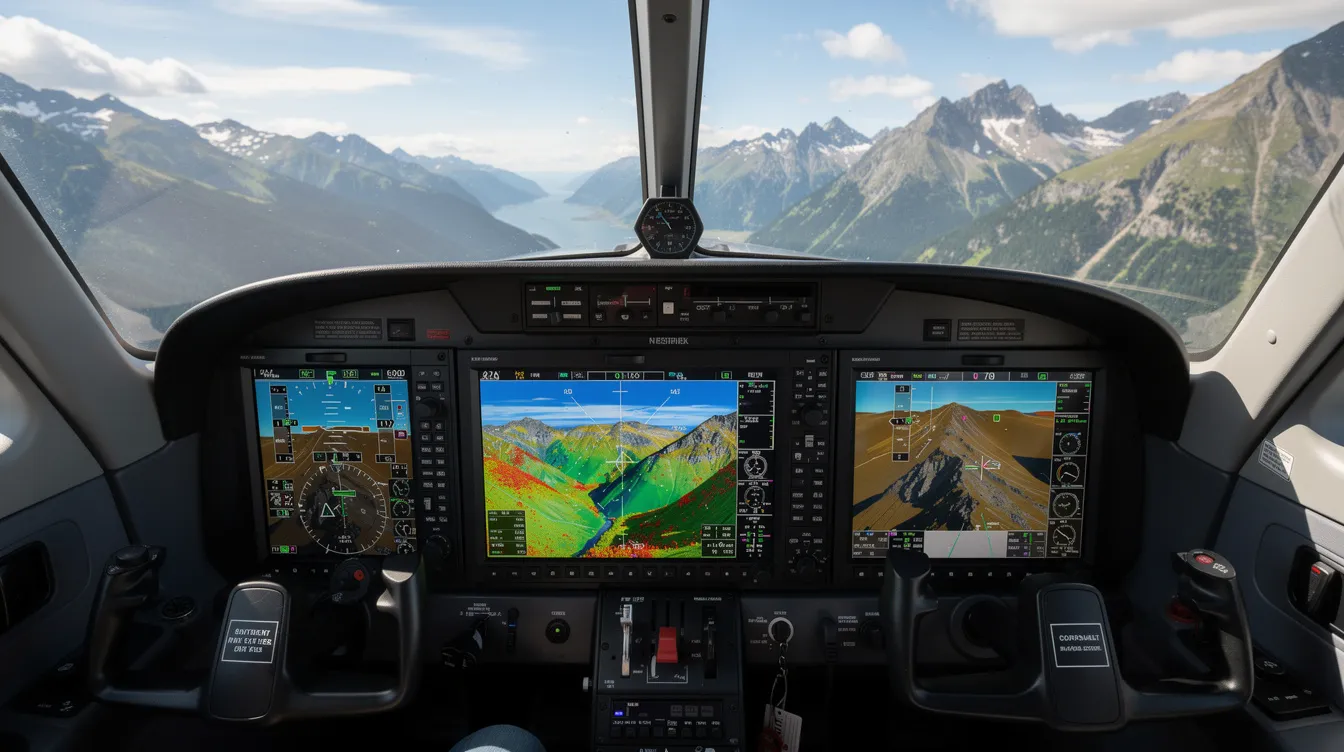
Modern avionics have fundamentally changed what a bush pilot sees and knows. Glass cockpits with synthetic vision now render surrounding terrain on a high-resolution display — even when the windscreen shows nothing but cloud. Terrain Awareness and Warning Systems (TAWS) provide audible alerts before a pilot gets dangerously close to rising ground. GPS with mapping overlays, ADS-B traffic awareness, and satellite weather updates give bush pilots situational awareness that was unimaginable in the analogue-panel aircraft of the 1970s and 1980s. These tools have meaningfully reduced the risk of controlled flight into terrain (CFIT), historically the leading cause of fatal bush accidents.
Operator certification: In the United States, most commercial bush operators hold Part 135 certificates, which mandate minimum pilot flight hours, recurrent training (including mountain and short-field operations), aircraft maintenance schedules, and insurance. Private jets must comply with FAA safety regulations under similar or more stringent frameworks. Canada enforces equivalent standards under Transport Canada for floatplane and bush operators.
Pilot qualifications: Pilots undergo rigorous training and certification processes. Mountain-flying endorsements, documented hours in type, and recurrent emergency-procedure training are baseline requirements — not differentiators. Aircraft are subject to regular maintenance checks for safety, with higher inspection frequency after off-runway operations.
BlackJet's vetting process mirrors our jet network safety standards: we require third-party safety audits (ARG/US, Wyvern, or IS-BAO), proper insurance minimums, and documented pilot experience before recommending or integrating a bush operator into a Jet Card member's itinerary. Safety certifications are essential for private aviation operations — this principle does not bend for smaller aircraft or shorter runways.
Real-time support and tracking: GPS flight following provides continuous position data via satellite. Limited communication and navigation facilities challenge bush pilots in remote areas like Alaska, the Yukon, and northern BC, but satellite phones and data links (Garmin inReach, SPOT) now ensure that pilots and passengers remain connected to dispatch even in the deepest backcountry.
How BlackJet Clients Use Bush Flying for Adventure and Access
Private jets offer multiple cabin classes for different needs — common cabin classes include light, midsize, and large jets — and each serves a distinct purpose on the trunk leg of a backcountry journey. Light jets typically seat 4 to 8 passengers comfortably and work well for shorter regional hops; large jets can accommodate up to 19 passengers or more for group expeditions. Cabin classes vary in size, amenities, and comfort levels, and the right choice depends on distance, party size, and how much gear you are hauling to the wilderness.
Here is how the pieces fit together in practice.
Case Study: Summer 2027
A BlackJet Jet Card member departs Los Angeles in a midsize jet bound for Jackson Hole. Two hours and forty minutes later, he steps onto the ramp at JAC, where a local STOL taildragger — tundra tires, vortex generators, oversized flaps — is already idling. Within the hour, he is airborne again, threading a canyon corridor into a private backcountry ranch in western Wyoming. Total time from LA driveway to ranch porch: under five hours. No commercial connection. No rental car. No overnight in a gateway town.
Concrete Scenarios
1. New York to an Alaskan fishing lodge A group of four flies BlackJet from Teterboro to Fairbanks in a super-midsize jet. At Fairbanks, a DHC-2 Beaver on floats is waiting. Ninety minutes later they touch down on a remote lake where the only structure is the lodge. The Beaver's pilot — 6,000 hours in type, years of Alaskan float experience — handles fuel and cargo on the dock himself.
2. Family canyon adventure in Utah: A family of five charters a light jet to Moab. From there, a Cub-style taildragger takes them on a canyon flying experience: short-strip landings near remote trailheads, red-rock walls rising hundreds of feet on either side. The kids watch the pilot thread the canyon from the backseat and call it the most fun they have had all year. By Friday evening, they are back in Moab, sharing cockpit videos from the day.
3. Executive access to a mining site in northern British Columbia. A mining executive uses a 25-hour Jet Card to reach a remote exploration camp. The itinerary: jet to Prince George, turboprop to a shorter regional strip, then a rugged bush plane to a gravel bar near the camp. Three aircraft, three surfaces, one booking. The entire sequence is managed by BlackJet's operations desk — synchronized departures, contingency plans, backup operators if weather or surface conditions change.
Coordination and Technology
BlackJet does not operate the bush planes directly. We curate and coordinate trusted partners, ensuring the same emphasis on safety, reliability, and schedule integrity that members expect from our primary aircraft fleet. Our 24/7 real-time support team manages these complex itineraries end to end:
Synchronized departures so the bush plane is not idling for hours waiting for the jet, and the jet is not repositioning unnecessarily.
Contingency planning for weather delays—if a strip in the mountains becomes unusable due to heavy rain or early November snow, the team proactively re-routes or reschedules before the client even knows there is a problem.
Multimedia in planning: Clients often review operator-supplied cockpit videos of approaches into specific backcountry airstrips before confirming their bush segment. Satellite imagery, approach diagrams, and in some cases VR walk-throughs of the strip environment give members a clear picture of what the final leg looks like — reducing uncertainty and building confidence.
The time between "I want to fish that lake" and "I'm casting on that lake" should be measured in hours, not days.
Sustainability and Carbon-Neutral Backcountry Travel
All BlackJet-operated or chartered jet segments are carbon-neutral as of 2027, achieved through verified offsets and, where available, Sustainable Aviation Fuel (SAF) partnerships. Global SAF production still represents only about 0.6% of total jet fuel consumption (ICCT, 2025), but adoption is accelerating — a 2023 Honeywell survey found that 37% of business-aviation operators expect to use SAF blends in the near future.
Bush segments present a different challenge. SAF availability is essentially nonexistent at remote strips, and per-passenger-mile emissions from small piston aircraft are inherently higher than from turbine jets. BlackJet addresses this through:
Efficient routing to minimize repositioning flights and consolidate passengers and cargo into fewer legs.
Selection of modern, fuel-efficient aircraft where practical — a Kodiak 100 burns less per seat-mile than a 1960s Beaver.
Whole-journey offsetting on request: We help offset the entire door-to-door itinerary, including partner-operated bush segments, using reputable North American carbon projects (reforestation, renewable energy in remote communities). Data is transparent - total lifecycle emissions, offset quantities, and project details are provided to the client.
For a deeper look at how private aviation is evolving toward lower-impact operations, explore our perspective on green private jet benefits.
Choosing Between Jet Ownership, Ad-Hoc Charter, and Jet Cards for Backcountry Access
Owning a bush-capable aircraft — a taildragger, floatplane, or amphibian — involves significant fixed costs: acquisition ($250K–$1.5M depending on type), hangar or tie-down fees, annual inspections, insurance, and pilot training or salary. For someone who makes two or three remote trips per year, the aircraft sits idle for 340+ days. Ownership makes sense only for enthusiasts who fly frequently and locally.
Ad-hoc charter offers flexibility but introduces unpredictability: availability during peak October hunting season or June fishing openers can be scarce, prices spike, and the quality and safety of bush partners vary widely without a vetting layer.
A Jet Card with BlackJet occupies the middle ground. Jet cards provide prepaid access to private jets at locked-in pricing for the main trunk legs to regional gateways — Anchorage, Jackson Hole, Kalispell, Prince George. Common jet card options include 25-hour and 50-hour programs, scaled to match travel frequency. Bush segments are added as coordinated extensions, arranged through vetted partners, scheduled and monitored by BlackJet's operations team. Jet cards cater to high-net-worth leisure travelers and executives who want institutional-grade logistics without the burden of aircraft ownership. Jet card users value flexibility, privacy, and luxury — and the hybrid model delivers all three without tying capital to a depreciating asset.
The mixed approach: Many dedicated backcountry enthusiasts combine strategies. They may co-own a small taildragger or water plane near a home base in Montana or Alaska for weekend adventures, while relying on BlackJet for long-range travel to distant gateways. This keeps fixed costs manageable while ensuring access to the full spectrum of private jet destinations.
Access Model | Best For | Key Advantage | Key Limitation |
|---|---|---|---|
Aircraft ownership | Frequent local bush flying (20+ trips/year) | Total control, always available | High fixed costs, utilization risk |
Ad-hoc charter | Occasional, unpredictable trips | No commitment | Variable pricing, inconsistent safety vetting |
BlackJet Jet Card + bush partner | Regular travel mixing business/leisure + periodic backcountry | Predictable pricing, vetted partners, seamless logistics | Bush segment pricing is separate |
Mixed (own + Jet Card) | Enthusiasts with local base + national/international travel | Best of both worlds | Requires managing two systems |
Key Takeaways
Bush flying is the bridge between polished private jet travel and the planet's most inaccessible landscapes — from Alaskan float lakes to Utah canyon floors.
Modern avionics, rigorous certification, and disciplined safety culture have transformed bush operations over the past 20 years without erasing the skill and judgment that define the craft.
BlackJet integrates bush segments into Jet Card itineraries through vetted local operators, maintaining the safety and service standards our members expect across every leg of the journey.
Sustainability in backcountry travel is achievable through efficient routing, modern aircraft selection, and transparent carbon offsetting — even when SAF is not yet available at remote strips.
For most high-net-worth travelers, the Jet Card-plus-bush-partner model delivers the optimal balance of access, predictability, and flexibility.
Bush flying is where precision meets wildness. For travelers who measure their ambitions in coordinates rather than city codes — who want to watch a grizzly from a lakeside lodge that has no road, or share a campfire story at a ranch only reachable by air — the backcountry is closer than it appears.
Frequently Asked Questions About Bush Flying
What is bush flying?
Bush flying is the operation of small aircraft in remote, rugged areas with limited aviation infrastructure. Pilots may use gravel bars, grass strips, frozen lakes, or water as landing surfaces, bringing travelers and essential supplies to places that roads and scheduled commercial routes cannot reach.
What aircraft are used for bush flying?
Bush flying uses specialized short takeoff and landing aircraft, including Cessna 180 and 185 Skywagons, de Havilland Beavers, modern taildraggers, and utility turboprops such as the Kodiak 100 and Twin Otter. Aircraft are selected for the terrain, passenger count, cargo, and conditions on the route.
Is bush flying safe?
Bush flying involves distinct risks, including changing weather, uneven landing surfaces, and limited access to assistance. Safety depends on sound go/no-go decisions, experienced pilots, suitable aircraft, careful weight-and-balance planning, maintenance, and operator oversight. BlackJet coordinates with vetted partners and plans contingencies, but no flight can be guaranteed regardless of conditions.
How does a Jet Card help with a backcountry trip?
A Jet Card provides prepaid access to private aircraft for the main journey to a regional airport. BlackJet can then coordinate a separate bush-plane or floatplane segment with a trusted local operator, aligning schedules and support across the itinerary. The remote-airstrip portion is arranged through the partner and may be priced separately.
Can bush planes land on water?
Yes. Floatplanes are designed to take off and land on water, while amphibious aircraft can operate on water and on land with suitable landing gear. The pilot and operator determine whether local water, weather, and aircraft conditions make a particular landing feasible.
Can bush flying be carbon neutral?
Remote bush segments may have limited access to Sustainable Aviation Fuel, and aircraft emissions vary by route and aircraft. BlackJet can help members explore whole-journey carbon offsetting, including partner-operated segments, with emissions and project details provided where available.
Conclusion: Bush Flying Extends the Reach of Private Aviation
Bush flying makes remote landscapes and communities accessible when roads and scheduled commercial routes fall short. It demands specialized aircraft, experienced pilots, careful weather and landing-area assessments, and disciplined safety decisions. For travelers, combining a private jet with a vetted local bush operator can connect the efficiency of a BlackJet Jet Card journey with access to a remote lodge, backcountry ranch, or isolated work site—without owning an aircraft for every leg. With thoughtful coordination, contingency planning, and transparent sustainability options, the journey can be both seamless and responsible. Whether exploring private jet charter services, comparing types of bush planes, reviewing private aviation safety standards, or considering green private jet benefits, travelers can plan with greater confidence. For those ready to travel beyond the runway, bush flying turns a distant destination into a considered, achievable itinerary.
Discover how a BlackJet Jet Card can extend your reach beyond the runway. Explore our Jet Card programs and start planning the journey that conventional aviation cannot complete.