
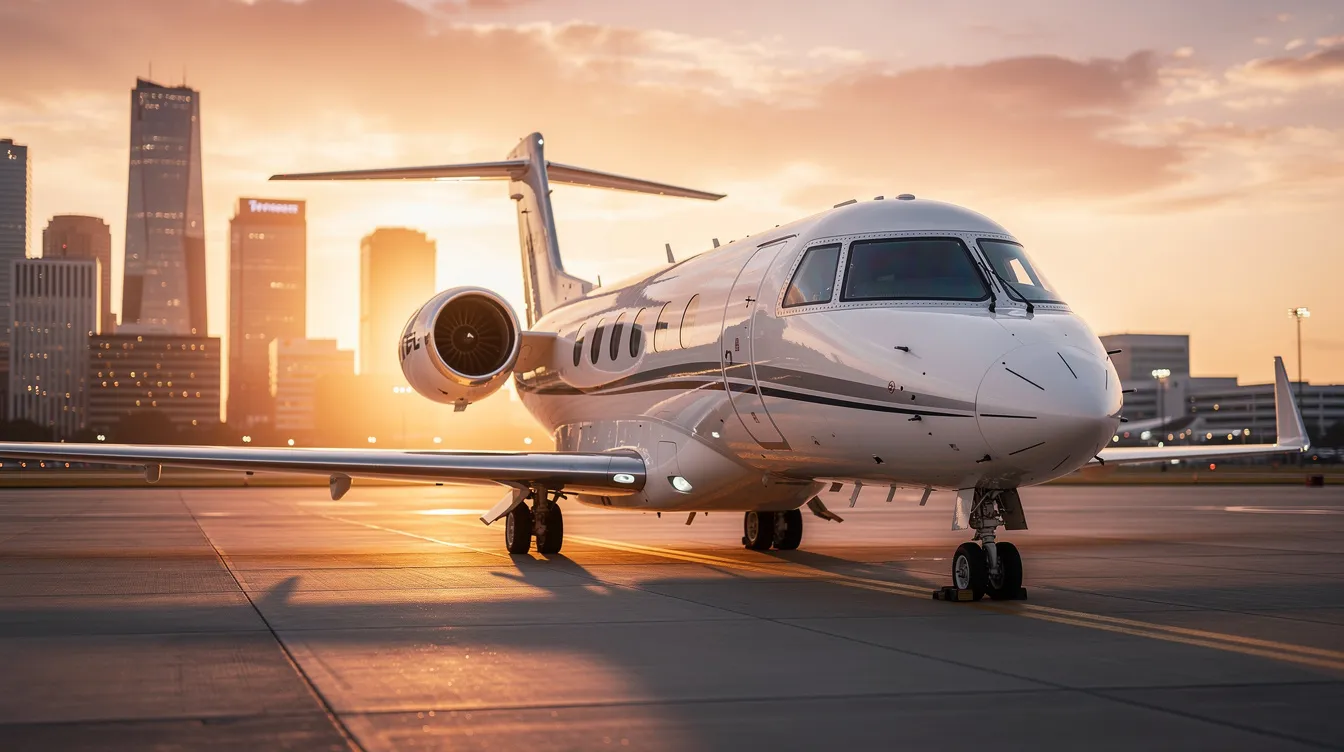
Corporate aircraft have evolved from executive perks into indispensable instruments of competitive advantage. In 2027, as airport congestion deepens and schedule reliability on commercial airlines erodes, the ability to control when, where, and how you travel is a measurable edge — one that compounds across every trip, every quarter, every year.
Why Corporate Aircraft Matter in 2027
Consider a managing director who needs to close a deal in Dallas by noon, then brief a project team in Chicago by five. On commercial airlines, that itinerary requires an overnight stay, two separate tickets, and roughly fourteen hours of door-to-door transit. On a business jet, the same executive departs Teterboro at 7 a.m., lands at Dallas Love Field by 10:30, flies to Midway after lunch, and is home for dinner. Corporate aircraft can accommodate multiple meetings in different cities in a single day — turning what would have been two lost workdays into one productive sweep.
Time Savings and Flexibility
On city pairs like LAX–SFO or NYC–DC, business aviation saves 30 to 60 minutes each way versus first-class commercial, once you factor in security queues, boarding, and ground transfer in 2027's congested hubs.
Major benefits include increased scheduling flexibility and operational control — the aircraft waits for you, not the other way around.
Corporate aircraft allow for on-demand scheduling and increased productivity, and businesses rely on them for time savings and flexibility above all else.
Access to Regional Airports
Corporate aircraft provide access to over 5,000 regional airports across the United States, letting executives land minutes from their destination rather than hours.
Private Aircraft Access Through BlackJet
BlackJet gives members access to private aircraft without ownership, via prepaid Jet Card programs spanning turboprop aircraft, very light jets, midsize jets, super-mids, and large-cabin business jets — all operated by safety-certified partners, with every flight carbon-neutral by default.
Types of Corporate Aircraft and How They're Used
The term "corporate aircraft" encompasses any business aircraft used for non-scheduled private travel — whether owned by a corporation, managed by a third party, or accessed through charter and Jet Card providers like BlackJet. These aircraft are used primarily for business objectives, from client visits to board retreats.
Turboprop Aircraft
Capacity: 6–9 passengers.
Range: Roughly 1,500 nm.
Examples and uses: Turboprop aircraft such as the King Air 350i excel at regional hops between secondary airports with shorter runways, offering low operating cost and the ability to reach small communities that jets cannot serve.
Very Light Jets
Capacity: 4–5 passengers.
Range: Missions under 1,000 nm.
Examples and uses: The Embraer Phenom 100, Cessna Citation Mustang, and similar models have a maximum takeoff weight under 10,010 lbs and deliver cost-efficient executive shuttle service between nearby metros.
Light and Mid-Size Jets
Capacity and range: Light jets typically accommodate 6–8 passengers over a range near 1,953 nmi. Mid-size jets like the Citation XLS+ offer roughly 2,000–2,500 nm of range.
Features and uses: Mid-size jets provide stand-up cabins and enclosed lavatories — ideal for multi-city trips across North America or Europe.
Super Mid-Size and Large-Cabin Jets
Super mid-size jets: Carry 10–11 passengers over a 3,420 nmi range.
Large-cabin jets: Large-cabin jets such as the Challenger 650 (≈4,000 nm) or Gulfstream G600 (≈6,600 nm) handle intercontinental missions with configurations seating up to 16 passengers.
Business Airliners
Capacity and uses: Business airliners, often converted from commercial airliners for VIP use, serve the largest delegations.
Choosing an Aircraft Through BlackJet
BlackJet Jet Card members select from these categories through the app or concierge, matching each aircraft type to the specific trip profile — no guesswork, no compromise, and comprehensive premium private jet card programs that emphasize comfort, safety, and sustainability.
Corporate Aircraft vs. Commercial Airlines
Business aviation complements commercial airlines rather than replacing them. The value proposition centers on time, flexibility, and privacy — especially when the stakes of a corporate flight demand precision.
Time Savings and Convenient Airports
A CEO flying commercial from JFK to Toronto Pearson in 2027 faces TSA screening, boarding, potential delays, and a 45-minute ground transfer into the city. The same executive departing Teterboro on a business jet lands at Billy Bishop — steps from downtown — after arriving at the private flight terminal just 15 to 30 minutes before departure.
Corporate jets typically cruise at higher altitudes than commercial airliners to avoid weather and turbulence, further reducing delay risk.
Executive travel frequently involves accessing smaller airports, and fewer commercial airports make corporate aircraft advantageous for remote access.
Scheduling Flexibility and Operational Control
Departure times adjust as meetings shift, routes change through BlackJet's real-time support, and smaller airports closer to headquarters and client sites become accessible.
Privacy and Productivity
Corporate aircraft provide a controlled environment for sensitive discussions — no seatmates, no eavesdropping. They serve as mobile offices for uninterrupted work during travel, with secure Wi-Fi, video conferencing, and cabin comfort that airline lounges cannot match.
Total Trip Economics
Companies often evaluate corporate aviation based on total trip economics. Flying a team of six managers on a mid-size jet can rival or undercut the cost of six last-minute business-class tickets once you account for hotels, meals, and lost productivity, especially when you understand jet card cost per hour across aircraft types. Corporate travel often justifies the higher direct costs of private aviation against that lost output.
Corporate aircraft enhance business opportunities by allowing access to diverse locations efficiently, and BlackJet's Jet Card model simplifies budgeting with fixed hourly rates across cabin classes — no surprise fuel surcharges or repositioning fees, which becomes even more important when evaluating a 100-hour jet card cost guide for frequent flyers.
Ownership, Charter, and Jet Cards: How Companies Access Business Aviation
Aircraft approach options include full ownership, fractional ownership, and charter services. The right model depends on how often you fly, how many passengers you carry, and how much operational complexity you want to manage.
Access model | How it works | Best suited to | Key considerations |
|---|---|---|---|
Full ownership | A company purchases and operates an aircraft. | Organizations with frequent, predictable flying and substantial annual utilization. | Highest capital commitment; owner is responsible for crew, hangar, maintenance, insurance, and management. |
Fractional ownership | Multiple parties share the aircraft's purchase and operating costs; a quarter share represents one-fourth of its purchase price. | Travelers seeking an equity stake and recurring access. | Includes management fees and contract terms; availability is tied to the fractional program. |
On-demand charter | The traveler books individual flights as needed and pays for each trip. | Occasional or irregular missions. | Pricing and availability can vary, particularly during peak travel periods. |
Jet Card | Members prepay for a block of flight hours and access aircraft under program terms. | Frequent travelers who value predictable rates and access without ownership duties. | Review aircraft categories, notice periods, peak-day rules, and any applicable fees. |
Full ownership of a corporate aircraft demands significant capital: new light jets start around $8–15 million, while large-cabin or ultra-long-range models reach $50–70 million or more. Fixed overhead — crew salaries, hangar, maintenance, insurance — makes ownership practical only at very high utilization, typically 400–600+ hours per year, which is why many buyers research the cheapest private aircraft options for budget-conscious owners or explore affordable very light jet and turboprop choices before committing.
Fractional ownership allows sharing costs among multiple users. A quarter share costs one-fourth of the aircraft price, with monthly management fees and minimum usage thresholds. Fractional ownership involves multiple parties sharing aircraft costs across a 3–5 year contract term, tying you to a specific fleet with limited flexibility, yet it continues to expand as the global private jet fleet of roughly 23,000 aircraft grows.
On-demand charter suits occasional missions but introduces variable pricing, constrained availability during peak travel windows, and operational complexity for corporate travel managers. Pay-as-you-fly models charge clients only for used flight hours, though unlimited usage models have been discontinued due to client exploitation; some travelers instead experiment with buying a seat on a private jet via shared or semi-private models.
BlackJet's Jet Card programs - available in 25- and 50-hour blocks - offer fixed hourly rates across specified aircraft categories, guaranteed availability with 24–48-hour notice, and no long-term ownership risk. For occasional travelers, a 25-hour jet card guide to features and costs can clarify whether a smaller commitment fits, while a 50-hour jet card cost overview helps frequent flyers benchmark pricing and value. This creates predictable value for individuals and companies alike.
Mid-market firms and entrepreneurs flying regionally benefit most from Jet Cards and charter. Global corporations with dedicated travel departments may justify ownership. Family offices often prefer fractional or Jet Card access to manage costs without the burden of full-time crew and maintenance, and many use a comprehensive jet card cost guide or a detailed look at jet card pricing structures and fees to compare programs.
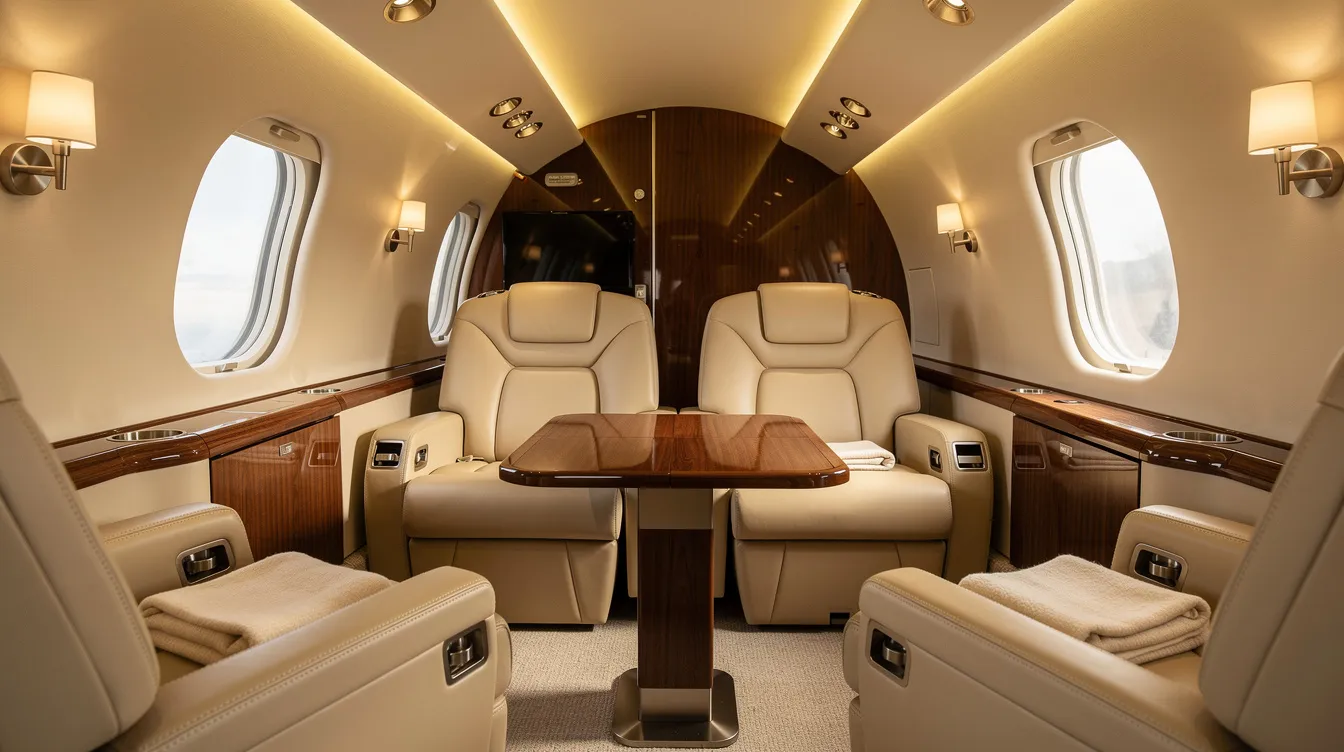
Key Corporate Aircraft Categories in the BlackJet Fleet
BlackJet's curated fleet spans multiple cabin classes, ensuring members can fly a turboprop for a quick regional hop or a large-cabin jet for an intercontinental mission — each selected for reliability and comfort.
Turboprop and Very Light Jets
Models: King Air 250, Pilatus PC-12, and Phenom 100.
Passenger capacity: 4–8 passengers.
Range: Not specified by aircraft model in this overview.
Uses: Built for same-day regional client tours and accessing small airfields with limited runway length.
Light and Mid Size Jets
Models: Citation XLS+, Learjet 75, and Hawker 800XP.
Passenger capacity: 7–9 passengers.
Range: Up to roughly 2,000–2,500 nm.
Features and uses: Meeting-style club seating, enclosed lavatories, and medium-sized luggage compartments make them the workhorse of multi-city North American and European itineraries, and they frequently appear in any private jet price list of categories and costs.
Super-Mid and Large-Cabin Jets
Models: Challenger 3500, Gulfstream G450, and Falcon 2000LXS.
Passenger capacity: Not specified by model in this overview.
Range: 3,000–4,000+ nm.
Features and uses: These jets deliver lie-flat seating, full galleys, and advanced cabin connectivity for board-level travel. Corporate aircraft allow for interpersonal connection between teams during transit — a design advantage of these larger cabins, especially when selecting the best private jet for about 20 passengers or planning charters on private jets configured for up to 50 passengers.
Booking and Aircraft Selection
BlackJet members choose categories when booking through the mobile platform, and BlackJet's advisory team helps right-size the aircraft for each route, passenger count, and payload requirement — ensuring efficiency without sacrificing comfort or freedom of scheduling.
Safety, Certification, and Operational Standards in Business Aviation
Safety is the first criterion in selecting corporate aircraft operators. In 2027, business aviation operates under stringent standards governed by the FAA, EASA, and national authorities worldwide.
BlackJet requires partner operators to hold ARGUS Platinum, Wyvern Wingman, or IS-BAO certifications — audits that cover maintenance programs, crew training, and operating procedures. Part 91 operations are regulated by the FAA, ensuring a baseline of compliance across the industry.
Minimum pilot experience thresholds for corporate aircraft typically include 2,500+ total flight hours for pilots in command, type ratings on specific aircraft, and simulator recurrent training at least annually. These requirements meet or exceed what most operators in the global network demand.
Maintenance regimes follow scheduled inspections based on flight hours and cycles, adherence to OEM service bulletins, and timely compliance with airworthiness directives. ACJ provides comprehensive support and services for aircraft maintenance, and CAA connects operators with over 300 Preferred FBOs nationwide, reinforcing service infrastructure.
BlackJet's internal safety team vets every operator and aircraft before they join the platform — background checks, insurance verification, and continuous monitoring of safety records ensure reliability across the fleet.
Real-time operational support, available 24/7, handles contingency planning for weather diversions, air traffic delays, and medical emergencies — critical for time-sensitive corporate travel.
Sustainability and the Environmental Impact of Corporate Aircraft
Private jets have a disproportionate carbon footprint compared to commercial flights, and private jets generate thousands of tons of CO₂ emissions annually. Some individuals travel over 350,000 km annually by private jet. In 2027, the industry faces increasing scrutiny, and credible operators must address this head-on rather than deflect.
A mid-size jet burns roughly 200–250 gallons of fuel per hour, while a narrow-body airliner like the Boeing 737 burns 750–900 gallons per hour but carries 150+ passengers. Per-passenger emissions from corporate aircraft remain significantly higher — a reality the industry cannot ignore.
Modern business aircraft powered by advanced turbofan engines, winglets, composite materials, and optimized aerodynamics are at the forefront of innovation in reducing fuel burn. Very light jets and efficient turboprops deliver substantially lower emissions per seat-mile when fully utilized, cutting thrust requirements and fuel consumption on short legs.
BlackJet's commitment to carbon-neutral flights means emissions from every Jet Card flight are calculated and offset through verified schemes — reforestation projects, renewable energy initiatives, and sustainable aviation fuel programs. This comes at no additional cost to the member and complements newer models of lower-cost private jet and turboprop flying that emphasize efficiency.
Sustainable aviation fuel adoption is accelerating, with SAF now more commonly available at major FBOs in New York, Los Angeles, London, and select European hubs. SAF can reduce lifecycle emissions by up to 80% depending on feedstock and blend percentage.
Right-sizing aircraft — choosing a very light jet instead of a large-cabin jet for a team of three — and optimized routing through BlackJet's planning tools further reduce environmental impact without compromise on service.
Technology, Booking Experience, and Trip Management with BlackJet
Modern corporate aircraft travel is as much about digital infrastructure as the aircraft themselves. For high-frequency travelers, the ease of booking and managing trips determines whether private aviation feels seamless or burdensome.
Mobile booking platforms offer 24/7 digital booking tools. BlackJet's app lets users search by route, date, and aircraft category, with instant estimates for flight time and pricing tailored to Jet Card members. Mobile platforms allow booking across multiple cabin types from a single interface, whether arranging a New York–London shuttle or bespoke private jet charters in Karachi.
Users can access real-time flight support via mobile platforms — in-app messaging or a direct concierge line — for last-minute itinerary changes, passenger list updates, catering requests, and ground transportation coordination. Mobile booking enhances convenience for private jet travelers by eliminating phone trees and email chains.
Cabin connectivity options — Wi-Fi, VPN-friendly networks, and video conferencing capability — are coordinated with operators to meet the requirements of business-critical flights.
Consider a CFO using the BlackJet app on a Sunday evening to schedule a Tuesday Boston–Chicago–Houston trip on a mid-size jet. As meetings shift Monday morning, she adjusts departure times in the app, adds a sales director to the passenger list, and requests a working lunch catered onboard — all before her first coffee. That operational freedom is what separates Jet Card access from ad hoc charter.
BlackJet handles personal data, itinerary confidentiality, and secure payment for Jet Card reloads with enterprise-grade encryption — because clients who discuss boardroom strategies at 41,000 feet expect the same discretion on the ground.
Use Cases: How Companies Leverage Corporate Aircraft
Private aviation is not limited to large corporations — 97 percent of U.S. business aircraft are used by non-Fortune 500 companies. Mid-market firms, family offices, and fast-growing startups all discover that corporate aircraft unlock success by multiplying what their people can accomplish in a day. As they scale, many compare the best jet cards for frequent flyers and their benefits, study how to maximize jet card tax deductions for business use, and benchmark providers such as NetJets through an overview of NetJets jet card costs and programs, often alongside research into top private jet companies for luxury travel and service.
Regional Sales Team Efficiency
A four-person regional sales team boards a turboprop at 7 a.m. in Indianapolis, visits clients in Des Moines, Omaha, and Kansas City, and returns home by 8 p.m. — three customer meetings across the Midwest in a single day, with employees energized rather than exhausted.
International Executive Travel
Executives fly on a super mid-size jet from New York to London overnight, arriving rested for a full day of meetings. They return the following afternoon via BlackJet's international travel coordination. Executive wellness is improved by reducing travel fatigue through corporate aircraft with lie-flat cabins and quiet environments.
Urgent Business Requirements
Corporate aircraft are commonly used for urgent business requirements. Engineers or medical specialists can be flown on short notice to distant facilities; corporate aircraft can transport sensitive cargo, including technicians and urgent medical supplies, arranged through BlackJet's 24/7 support with no independent booking complexity.
Leadership Offsites
Leadership teams use mid-size jets to reach remote resort locations for annual strategy offsites, keeping the corporation's roadshow on schedule and the world within reach.
Operational Flexibility
The operational flexibility of corporate aircraft facilitates adjustments during trips, and BlackJet's Jet Card model simplifies planning for these repeatable patterns with predictable hourly rates and guaranteed access.
Frequently Asked Questions About Corporate Aircraft and Jet Cards
This section addresses common questions executives and travel managers ask about business aviation and Jet Card programs for the first time.
What is the difference between a private aircraft, a corporate aircraft, and a business jet?
A private aircraft is any non-commercial plane. A corporate aircraft is a private aircraft used specifically for company business. A business jet is a jet-powered corporate aircraft — a subset of the broader category.
How much does it cost per hour to use business aircraft through a Jet Card in 2027?
Indicative ranges: turboprops ~$5,000–$6,500/hr, light jets ~$7,000–$9,000, midsize jets ~$9,000–$11,000, super-mids ~$11,000–$13,500, and large-cabin jets ~$14,000–$17,000. All-in pricing includes fuel and federal excise tax.
How far in advance do I need to book with BlackJet to guarantee availability?
Typical notice periods range from 24 to 48 hours depending on cabin class and season, with peak-day surcharges applying on roughly 45 high-demand days per year.
Can I fly internationally with a Jet Card?
Yes. Super-mid and large-cabin categories support routes like East Coast U.S. to Western Europe, intra-Europe, and intra-Gulf trips. BlackJet's team manages customs, immigration, and overflight permits.
How does BlackJet ensure safety and maintenance standards?
BlackJet requires ARGUS, Wyvern, or IS-BAO certification from every partner operator, conducts independent vetting, and continuously monitors safety records — no exceptions.
Ready to explore whether a Jet Card fits your travel profile?
Speak with a BlackJet advisor to analyze your past 12–24 months of travel and discover the right mix of corporate aircraft solutions for your company, your family, or yourself.
Conclusion: Corporate Aircraft as a Strategic Business Tool
In 2027, corporate aircraft offer more than a premium travel experience: they give businesses greater control over schedules, access to regional destinations, and the ability to turn transit time into productive time. For companies weighing ownership, fractional access, charter, or a Jet Card, the right choice depends on flight frequency, passenger needs, and the value of flexibility. Explore private aviation options for business travel to compare access models and find the right fit.
BlackJet’s 25-hour and 50-hour Jet Card programs provide a practical route to private jet access without the capital commitments and operating responsibilities of owning an aircraft. Members can select the cabin class suited to each mission, book through BlackJet’s mobile platform, and rely on round-the-clock support, safety-vetted operators, and carbon-neutral flights. For executives coordinating a same-day client tour or teams traveling across multiple cities, that combination can make business aviation a considered investment in time and operational resilience.
Explore BlackJet’s Jet Card programs to discover an approach to corporate travel shaped around your schedule, your priorities, and the way your business moves.