
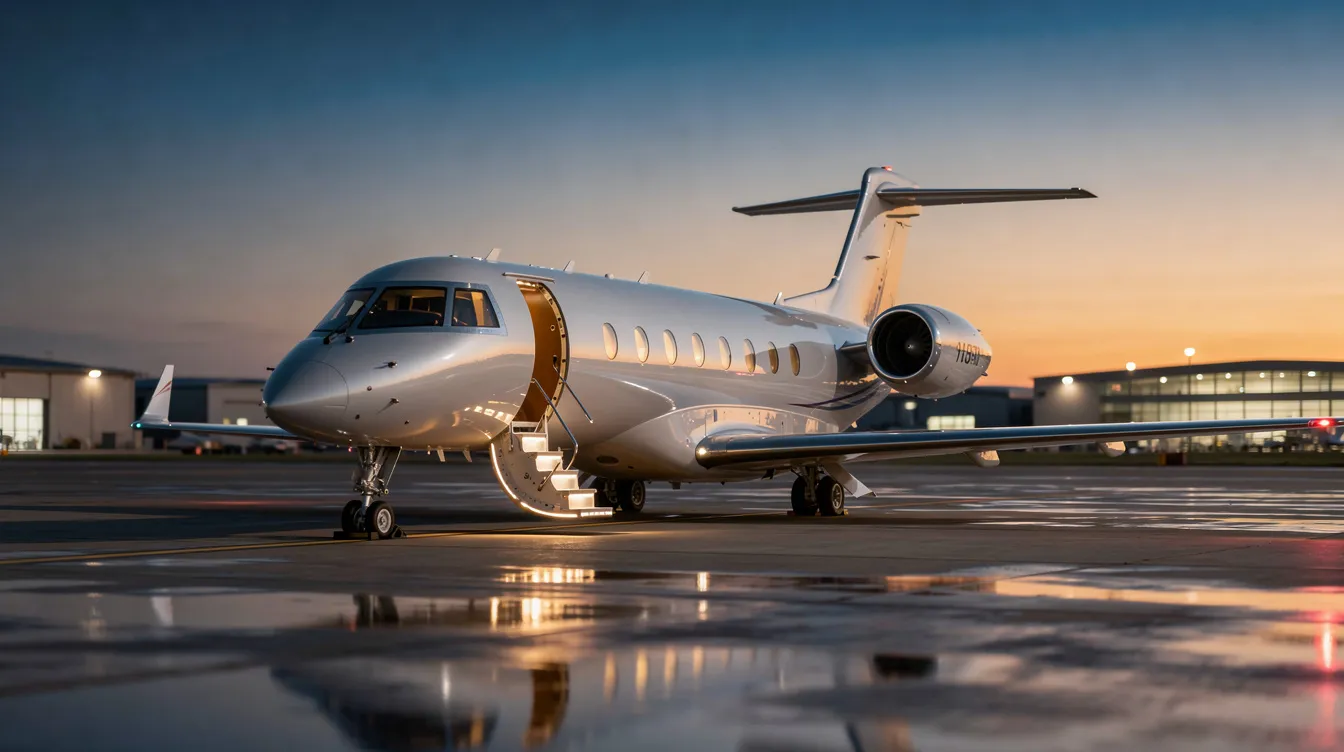
Private jet flights are no longer reserved for the ultra-wealthy. Between rising commercial flight delays, new digital booking platforms, and a maturing empty leg market, flying private for cheap has shifted from wishful thinking to a repeatable strategy for travelers who know where to look—even for those who could justify owning a 20 million dollar private jet but prefer smarter access models.
Why "Flying Private for Cheap" Is Finally Possible in 2027
Consider a New York to Miami trip in 2027. A commercial first-class ticket through JFK requires arriving two hours early, navigating security, and accepting unpredictable delays. Total door-to-door time: often five to six hours. A light jet charter from Teterboro cuts that to roughly three hours, including a 15-minute pre-departure arrival, direct boarding, and a custom schedule. The private jet experience saves 1.5 to 2 hours each way on a round trip.
"Cheap" in private aviation does not mean rock-bottom pricing. It means the lowest cost per traveler per hour, achieved by pulling several levers: empty leg flights, shared charters, membership programs, flexible scheduling, and right-sizing the aircraft type. Pricing structures vary widely across private flight options, so the goal is optimization, not just discount hunting.
BlackJet's premium private jet card programs fit this framework. Members prepay flight hours across multiple cabin classes, fly with safety-certified operators, and receive carbon-neutral flights on every itinerary at no extra charge. Hourly rates are fixed by cabin category, removing the guesswork that plagues ad hoc charter quotes, while still letting you benchmark value against top private jet companies in the broader market.
This guide covers concrete tactics: empty legs, Jet Cards, group travel, flexible departure time and airport choices, and how to compare prices across private jet rental options, drawing on BlackJet's broader playbook for flying private cheap.
Fast Start: The 5 Quickest Ways to Fly Private for Less
Before the deep dives, here are the five levers that cut costs fastest.
Book an empty leg flight. A light jet repositioning from Teterboro to Palm Beach might list at $3,500 to $6,300 instead of the $10,000+ full charter price, a discount of up to 75%. Empty leg flights can save travelers up to 75%.
Choose a light jet for short trips. Four travelers flying Los Angeles to Las Vegas on a light jet spend roughly $2,500 per person. Light jets accommodate 4 to 7 passengers for short trips, making them the right aircraft for sub-three-hour routes.
Fly as a group to split a private jet charter. Eight passengers in a super midsize jet from New York to Miami divide a $20,000 charter into $2,500 each, comparable to last-minute commercial business class but with full schedule control.
Use a Jet Card or membership program. Frequent flyers who lock in 25+ hours per year at fixed hourly rates avoid the surcharge volatility of one-off charters. Jet cards typically offer prepaid access to private jets across multiple cabin classes.
Stay flexible on departure time, date, and airport. Shifting from a Friday afternoon departure to Tuesday morning, or from LAX to Van Nuys, opens access to underutilized aircraft and repositioning flights.
BlackJet Jet Card members combine several of these tactics; flexible dates plus aircraft type optimization plus empty leg alerts reduce effective hourly costs below published market averages.
Understanding What Really Drives Private Jet Costs
To make private jet flights affordable, you first need to know what you are paying for. Several factors determine your final invoice: aircraft size, flight duration, distance, demand patterns, crew costs, fuel, and the base location of the aircraft—considerations that also shape whether buying a 2 million dollar private jet makes financial sense versus charter or Jet Card access.
Private jet charter costs can exceed $20,000 per flight hour before taxes and fees on heavy and ultra-long-range cabins. Private jet rental prices vary based on aircraft size and demand. A Friday departure during holiday season from a congested metro will cost more than a midweek Tuesday from a reliever airport because operators face higher repositioning costs, overnight crew expenses, and limited fleet availability.
Traveling during off-peak times can reduce costs by 10% to 30% depending on cabin class and route, especially once you understand the fundamentals of private jet charter pricing. The major cost components break down as follows:
Hourly operating rate (fixed + variable by aircraft type)
Fuel (Jet-A wholesale near $3.76/gallon; FBO markups vary)
Repositioning or ferry flights: the cost of moving an aircraft without passengers to your departure airport before your trip begins.
Landing fees, handling fees, and de-icing charges
Crew overnight and scheduling surcharges
Safety and certification standards from ARGUS- or Wyvern-rated operators add structure to pricing but protect long-term value, reinforcing that private jets are a very safe way to travel. BlackJet's carbon-neutral commitment and operator vetting fold these costs into predictable Jet Card rates rather than surprising you with line-item surcharges.
Flying private for cheap should never mean cutting corners on safety or regulatory compliance. It means using smarter structures and timing.
Empty Leg Flights: The Single Biggest Discount Lever
An empty leg flight occurs when a jet travels without passengers, repositioning to its next charter or returning to base. Because the operator already bears the fixed costs, these flights are often available at reduced prices.
Empty leg flights can cost up to 75% less than a standard private jet charter on the same route. Empty leg flights depend on existing aircraft movements, so you accept fixed routing, pre-set arrival airports, and a departure window chosen by the original customer's itinerary.
The trade-offs are real: you cannot re-spec cabin configuration, the aircraft type is predetermined, and cancellation risk exists because if the original charter changes, the empty leg vanishes. Booking an empty leg flight can be done through specialized apps and deal aggregators that track availability for semi-private and empty leg flights across multiple operators.
In 2027, digital platforms let you filter empty legs by route, cabin class, passenger count, and date range. BlackJet surfaces suitable empty leg options directly to Jet Card members, matching deals to each traveler's flex profile.
Scenario: A couple in New York spots a last-minute empty leg from Teterboro to Opa-locka listed at $6,300 for a light cabin. The full charter price for the same route would run $12,000+. They save over $5,000, or roughly $3,150 per person, and still arrive at a private terminal in South Florida with no security line and no connection.
Choosing the Right Aircraft Type to Cut Costs (Without Killing Comfort)
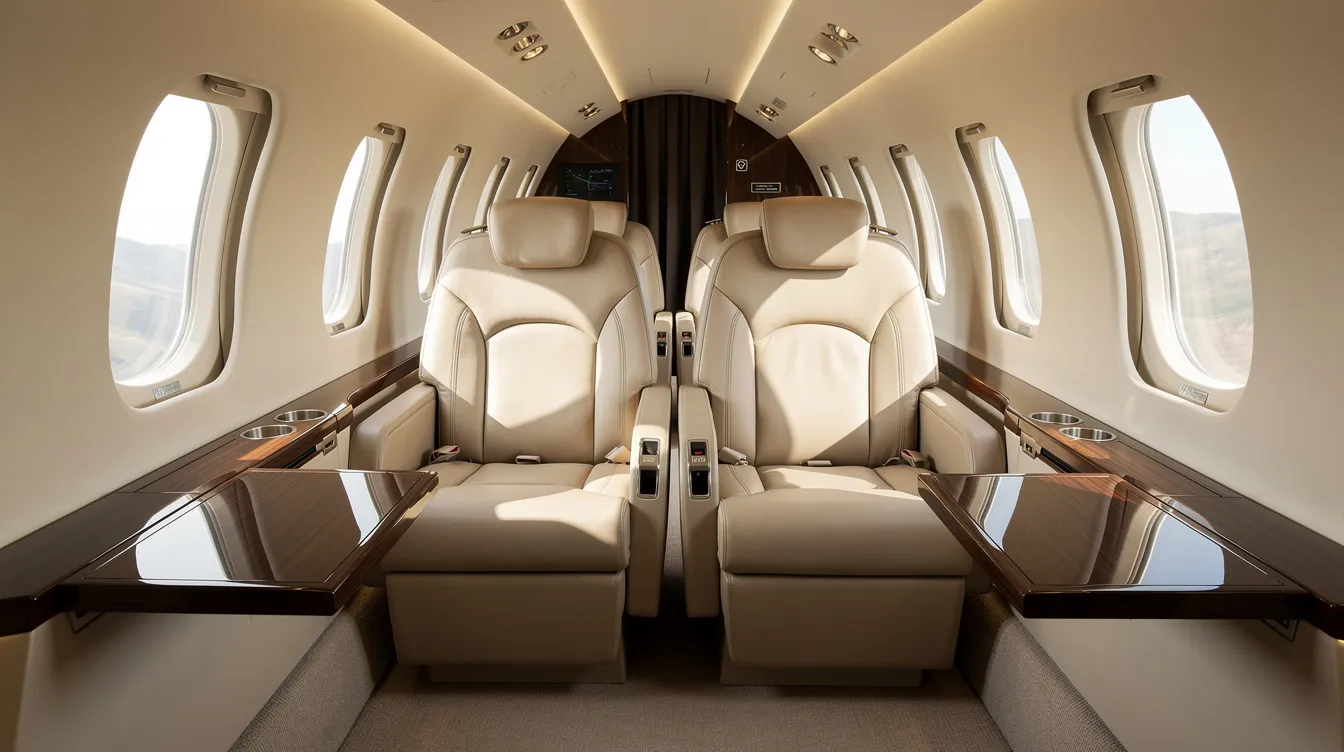
Aircraft type and cabin category are the main levers you control when optimizing cost. Using smaller aircraft like turboprops can reduce operational costs for short trips, and stepping up to a heavy jet only makes sense when range, passenger count, or baggage load demand it.
Here is a breakdown of common aircraft types and their 2026-2027 charter hourly rates, along with other budget-friendly private aircraft options:
Aircraft Class | Seats | Range (nm) | Hourly Rate (Charter) | Best For |
|---|---|---|---|---|
Turboprop | 6-9 | 800-1,200 | $1,800-$5,200 | Short hops, rural airports |
Light Jet | 4-7 | 1,200-1,800 | $2,500-$4,500 | Short trips under 3 hours |
Midsize Jet | 7-9 | 1,800-2,600 | $4,500-$7,500 | Flights lasting up to 5 hours |
Super Midsize | 9-10 | 2,800-3,500 | $7,500-$12,500 | Coast-to-coast, more space |
Heavy Jet | 10-16 | 4,000-6,000 | $12,000-$22,000 | International travel with up to 12 hours flight duration |
Ultra-Long-Range | 12-19 | 6,000-7,500 | Up to $24,000+ | Intercontinental, top-notch amenities, gourmet meals |
Light jets accommodate 4 to 7 passengers for short trips like Dallas to Aspen or a weekend getaway from Milan to Nice and are among the most popular small private jets for luxury travel. Mid-size jets are suitable for flights lasting up to 5 hours, covering routes like Chicago to Miami. Super mid-size jets typically accommodate 9 to 10 passengers, offering stand-up cabins and more space for a business trip coast to coast. Heavy jets are ideal for international travel with up to 12 hours of flight time, while ultra-long-range jets are best for intercontinental flights and are the most expensive, costing up to $24,000 per hour, similar to the most expensive private jet options for luxury travel discussed alongside broader billionaire private jet price trends.
BlackJet's Jet Card gives members access across multiple aircraft types, so you can fly a light jet for a short trip and upgrade to a heavy cabin for a transatlantic leg without fractional ownership commitments or owning one fixed jet, while resources like BlackJet's guide to the best small private aircraft and private jets for sale under 10 million help clarify which categories fit each mission.
Flexibility: How Date, Time, and Airports Slash Your Private Jet Bill
Your schedule flexibility is almost as valuable as your budget when chasing cheaper private jet flights. Avoiding fixed schedules can help you take advantage of repositioning flights during empty legs.
Flexibility with travel dates increases the chances of securing cheaper flights. According to UpLeg's Empty Leg Index, 36% of empty legs list a flexible departure window rather than a fixed time, and the median lead time is about 21.9 days. By offering a 24- to 36-hour departure window, you multiply your chance of matching an available empty leg flight.
Alternative airports matter. Van Nuys instead of LAX, Teterboro or White Plains instead of JFK, and similar reliever airports around major destinations carry lower landing fees and less congestion. BlackJet advisors and the mobile booking platform present multiple options (different airports, departure times, arrival times) side by side so travelers can pick the cheapest acceptable configuration for each trip.

Compare Prices the Smart Way: Charter Brokers, Marketplaces, and Jet Cards
Price transparency for private jet flights has improved, but only if you compare prices from multiple providers and understand what each quote includes. Comparing prices from multiple providers helps find better deals.
Three models dominate:
On-demand private jet charter: per-trip quotes; pricing varies by operator, route, and scheduling. Good for occasional travelers.
Online charter marketplaces: aggregate operators; useful to find charter flights and benchmark rates, but watch for hidden repositioning charges.
Jet Cards / membership programs: prepaid hours at fixed or capped hourly rates. Best for frequent flyers doing 25-50+ hours per year.
When comparing, check: hourly rate, minimum billable flight time (often 1.5-2 hours), repositioning charges, landing and handling fees, additional services like catering or ground transport, and the 7.5% Federal Excise Tax on domestic charters; in other words, you are effectively building your own private jet price list for your typical routes.
Do not judge on sticker price alone. Operator certification, aircraft age, safety records, and carbon offset policies are non-negotiable filters. A rock-bottom quote from an unverified operator is not a suitable plan, and understanding when chartering a private jet is worth it helps you focus on value instead of just price.
For frequent flyers, run a simple annual spend scenario. If you fly 25-50 hours per year, compare the cumulative cost of ad hoc charter flight bookings against a Jet Card's fixed hourly rates, broader Jet Card pricing structures, and the specific benefits of a 25-hour Jet Card. In most cases, the Jet Card wins on both cost and convenience once you cross roughly 20 hours annually.
Membership Programs and Jet Cards: Long-Term Savings for Frequent Flyers
A private jet membership or Jet Card is prepaid flight hours that unlock preferred pricing, priority access, and service guarantees. Membership programs offer fixed hourly rates for private jet flights, turning volatile charter pricing into a flat fee per hour by cabin class. Members receive priority access to aircraft through membership programs, and membership programs can provide discounted prices for frequent flyers, especially when you focus on the best jet cards for frequent flyers and compare options like a 50-hour jet card cost breakdown.
Sample scenario: An executive flies 35 hours per year between Chicago, New York, and Dallas, mixing light and midsize jets. Ad hoc charter rates average $8,500/hour (light) and $10,500/hour (midsize). Total: roughly $332,500. A BlackJet 25-hour Jet Card at approximately $8,300/hour (light) and $9,600/hour (midsize), plus waived repositioning on common routes, reduces total spend by 8-15%. Over three years, that delta compounds, and stepping up to a BlackJet 25+ Hour Jet Card can further optimize costs for larger-cabin flying, especially when benchmarked against competitors such as NetJets jet card costs.
Membership programs often include initiation or monthly fees, so factor those into your calculation. The benefits, including safety vetting of every operator and aircraft, real-time flight support, wi-fi connectivity, and BlackJet's automatic carbon-neutral offsetting for each flight, justify the commitment for anyone flying private three to six or more trips per year.
Membership programs are not ideal for one-off travelers. For a single trip, an empty leg or ad hoc charter at short notice may deliver the best deal. But for consistent private travel, a Jet Card converts planning into predictability.
Lowering the Cost Per Person: Shared Flights and Group Travel
Private aviation becomes comparatively affordable when you divide the total charter price among more passengers. Cost-sharing on a private jet makes it economically accessible for groups of 4 to 8 travelers and even for larger parties when you evaluate the best private jet for 20 passengers, especially when you know how to buy a seat on a private jet instead of footing the entire charter alone.
Eight friends chartering a super midsize jet from New York to Miami split $20,000 into $2,500 per person. That is within range of last-minute commercial business-class tickets, but with direct boarding, flexible scheduling, and no connections.
Semi-private flights allow booking single seats on scheduled private jet shuttles on high-demand routes. Shared flights can start at just $100 per seat on certain rideshare-style services, and for very large groups it may be more efficient to consider private jets for up to 50 passengers. Though typical seat-sale pricing on a light jet runs $500 to $2,000 depending on route and demand, understanding jet card cost per hour helps you benchmark when per-seat offers are truly a bargain.
BlackJet helps corporate teams, family groups, or entertainment entourages configure the right aircraft so that cost per traveler undercuts comparable commercial premium cabins, and the same principles scale up to charter planes for around 100 passengers on major corporate or entertainment movements. A board traveling London to Zurich for a same-day meeting, for example, charters one midsize jet for six executives instead of six separate business-class tickets tied to commercial schedules. Per-person cost rises modestly over economy, but time savings and productivity gains on a business trip more than offset it.
Safety, Sustainability, and Tech: Don't Chase "Cheap" at Any Cost
The cheapest quote is dangerous if it compromises safety. Every private jet charter should be verified against essential safety checks: Part 135 certification (in the U.S.), ARGUS or Wyvern ratings, pilot hour minimums, and current maintenance records; even when evaluating affordable private planes and light jets, those standards remain non-negotiable. BlackJet's proprietary operator vetting and safety certification standards ensure that lower cost never means lower standards.
Sustainability matters even when hunting for deals. Choosing modern light jets with lower fuel burn, efficient routing, and carbon-neutral operations reduces both environmental impact and long-term cost, echoing broader trends in the cheapest private jet and entry-level options and other budget-friendly private aircraft that focus on efficiency as much as luxury. BlackJet includes carbon-neutral flights on every itinerary at no additional cost to members.
Modern tech, including mobile booking, real-time support, digital contracts, and dynamic availability displays, lets travelers find legitimate low-cost options like empty leg flights quickly without relying on unsafe or unverified operators—capabilities that become especially powerful when paired with larger commitments like a 100-hour jet card or even longer-term private jet leasing arrangements.
Frequently Asked Questions About Flying Private for Cheap
What is the cheapest way to fly private?
Empty leg flights can offer the largest discounts, sometimes up to 75% off a comparable charter. They depend on existing aircraft movements, however, so routes and departure times are limited. If your schedule is fixed, compare quotes for a right-sized aircraft, consider sharing the charter with a group, and check whether a Jet Card makes sense for regular travel.
How much does it cost to rent a private jet?
Private jet rental costs depend on aircraft type, route, demand, and fees. Typical hourly rates range from $2,500 to $4,500 for a light jet, $4,500 to $7,500 for a midsize jet, and $7,500 to $12,500 for a super midsize jet. Heavy and ultra-long-range aircraft cost more. Ask for an itemized quote that includes taxes, handling, and any repositioning charges.
Are empty leg flights reliable?
An empty leg is tied to an aircraft’s existing itinerary and may change or become unavailable if that itinerary changes. Confirm the schedule, cancellation terms, and whether you have a return plan before booking. Empty legs suit travelers with flexible plans better than those facing a fixed arrival deadline.
Is a Jet Card cheaper than chartering?
It depends on how often you fly and which routes and aircraft you use. Jet Cards typically provide prepaid access at fixed hourly rates, plus priority aircraft access; they may also involve initiation or monthly fees. Frequent flyers should compare the full annual cost against on-demand charter quotes, while occasional travelers may prefer a one-off charter or empty leg.
How can I lower the cost per person?
Traveling with a group of four to eight can make a charter more economical when passengers split the total price. You can also compare semi-private flights, where available, to book a single seat on a scheduled private jet shuttle. Match aircraft size to your passenger count and route, and include luggage and ground transport in your planning.
Can I fly affordably without compromising safety?
Yes. A lower price should come from flexibility, aircraft choice, or a suitable access model—not reduced safety standards. Confirm the operator is properly certified for the flight, review independent safety ratings where available, and ask about the aircraft, crew, and cancellation provisions. BlackJet works with safety-vetted operators and includes carbon-neutral flights for members at no extra cost.
Practical Booking Playbook: Step-by-Step to Your First Affordable Private Jet Flight
Define your mission: origin, destinations, number of passengers, baggage, and how flexible your departure time and date can be. Review BlackJet’s guide to choosing the right private jet size to match your itinerary to an appropriate aircraft class.
Benchmark costs: look up approximate charter flight pricing by aircraft class for your route. Use this article's table as a starting reference, then compare it with BlackJet’s private jet pricing guide.
Search empty legs: check deal aggregators and platforms for empty leg flights matching your flex profile. Booking at least 1 to 2 weeks in advance ensures better availability. Learn more about finding last-minute private jet deals and the trade-offs involved.
Get 2-3 quotes: compare prices across vetted providers. Include hourly rate, repositioning, landing fees, and taxes in every comparison. BlackJet’s guide to finding charter flights can help you evaluate available options.
Evaluate airports and timing: test alternative airports and midweek departure to find the best deal.
Confirm safety credentials: verify operator certification, aircraft age, and cancellation policies before you sign.
Build a flex profile: list acceptable airports, departure windows, and cabin preferences. Share it with a provider like BlackJet so advisors can proactively match deals.
Run your annual math: after 2-3 trips, calculate total hours flown and average cost per hour. If you are crossing 20+ hours, a Jet Card delivers lower effective rates and better access.
Flying private for cheap is not about finding the lowest sticker price. It is about structuring every trip so that time, comfort, cost, and safety align, whether you are flying in the U.S. or optimizing private jet prices in rupees for trips within India. The difference between overpaying and flying smart comes down to planning, flexibility, and choosing the right access model.
Explore BlackJet's Jet Card programs to turn occasional bargains into consistent, strategically priced private jet access.