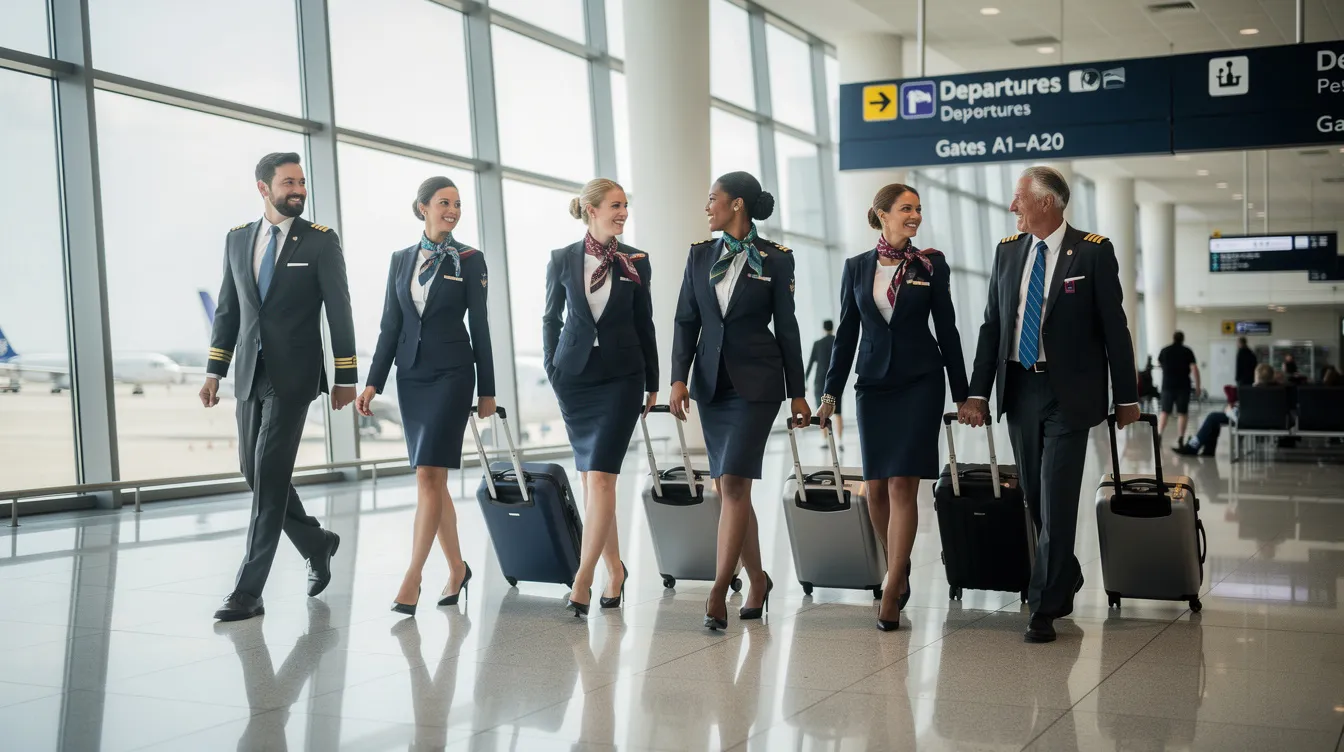
Flight attendant pay is one of the most misunderstood compensation structures in any industry. The answer to how much a flight attendant makes per hour depends on whether you're talking about a first-year hire at a regional carrier or a senior purser flying international routes on a legacy airline. It also depends on whether you mean paid flight time or total time spent working, two very different numbers.
Here's what the data actually shows in 2024–2026, plus how private jet cabin crew compensation compares.
Key Answer: How Much Does a Flight Attendant Make Per Hour?
The average salary for flight attendants is often misunderstood because the widely cited $29.52 figure from the Bureau of Labor Statistics is measured by flight time, not total working hours. The median hourly wage sits at about $29 to $30 per hour. But that range stretches dramatically based on seniority and airline type: entry-level crew members may earn as little as $18–$25 per flight hour at regional carriers, while senior flight attendants at major US carriers can earn $80 or more per hour.
The critical distinction: "per hour" in commercial aviation almost always refers to flight time—the period between when the aircraft door closes and when it opens at the destination. It does not include boarding, deplaning, ground delays, or layovers. This makes the published hourly rate significantly higher than what most flight attendants earn when you divide total pay by total duty hours.
Private jet cabin crew pay works differently. Rather than union-negotiated hourly rates plus per diem, corporate and charter flight attendants often earn day rates, annual salaries, or fixed fees per trip that can exceed commercial hourly rates when calculated against actual flying time.
Experience Level | Commercial Hourly Rate (Flight Time) | Approximate Annual Salary |
|---|
Entry-Level / Regional | $18–$37/hour | $28,000–$45,000 |
Mid-Career / Mainline | $38–$65/hour | $50,000–$70,000 |
Senior / International | $67–$100+/hour | $80,000–$130,000+ |
At BlackJet, the cabin crew aboard our partner aircraft reflects the premium end of this spectrum—professionals trained for bespoke, high-touch service in an intimate private cabin environment.
How Flight Attendant Pay Actually Works by the Hour
Flight Pay and Credit Hours
Flight attendant compensation is unlike a standard salary. Understanding how most flight attendants get paid requires knowing a few industry-specific concepts:
Flight pay: The base hourly rate kicks in only during flight time. At most airlines, the clock starts when the aircraft door closes and the brakes release, and stops when the aircraft parks at the gate. Flight attendants are generally paid only for flight hours rather than duty hours.
Credit hours: Monthly pay is calculated from credit hours, typically 75–100 per month. This is far less than a 160-hour traditional workweek because it excludes ground time, preflight briefings, and layovers. Actual duty time—including deadhead travel, airport waits, and hotel rest periods—runs considerably higher.
Per Diem and Boarding Pay
Per diem pay: A separate hourly allowance (typically $2.00 to $3.00 per hour away from the base location) that covers meals and incidentals. This is paid from report time through release, including layovers.
Boarding pay: A recent development at major carriers. Delta introduced boarding pay at 50% of the hourly flight rate; United Airlines followed with its new contract in 2025–2026. Not all airlines include it yet.
Deadhead pay: When crew members travel to a different base for assignment, deadhead pay is 100% pay for that repositioning travel.
The result: a flight attendant earning $35 per flight hour may only accumulate 80 paid hours in a month despite being away from home for 250+ hours.
Average Flight Attendant Salary and Hourly Pay in 2024–2026
Salary Distribution and Averages
The median annual salary for flight attendants was approximately $68,370 in early 2026, according to Bureau of Labor Statistics data. The average flight attendant salary runs slightly higher—in the mid-to-high $70,000 range—because top earners pull the average upward.
Here's how the distribution breaks down:
The lowest 10% earned under $34,030 annually
Mid-career flight attendants earn between $50,000 and $70,000
The top 25% of flight attendants earn over $98,160 annually
The highest 10% exceeded $138,000
Tier | Hourly Pay (Flight Time) | Monthly Credit Hours | Annual Salary Estimate |
|---|
Entry-Level | $25–$37/hour | 75–80 | $28,000–$45,000 |
Mid-Career (3–6 yrs) | $38–$65/hour | 80–90 | $50,000–$70,000 |
Senior (10+ yrs) | $67–$100+/hour | 80–100 | $80,000–$130,000+ |
Regional airlines typically pay toward the lower end, while legacy and premium international carriers pay at the upper end. The median flight attendant salary sits near the middle, reflecting the large number of crew members in mid-career positions across the industry.
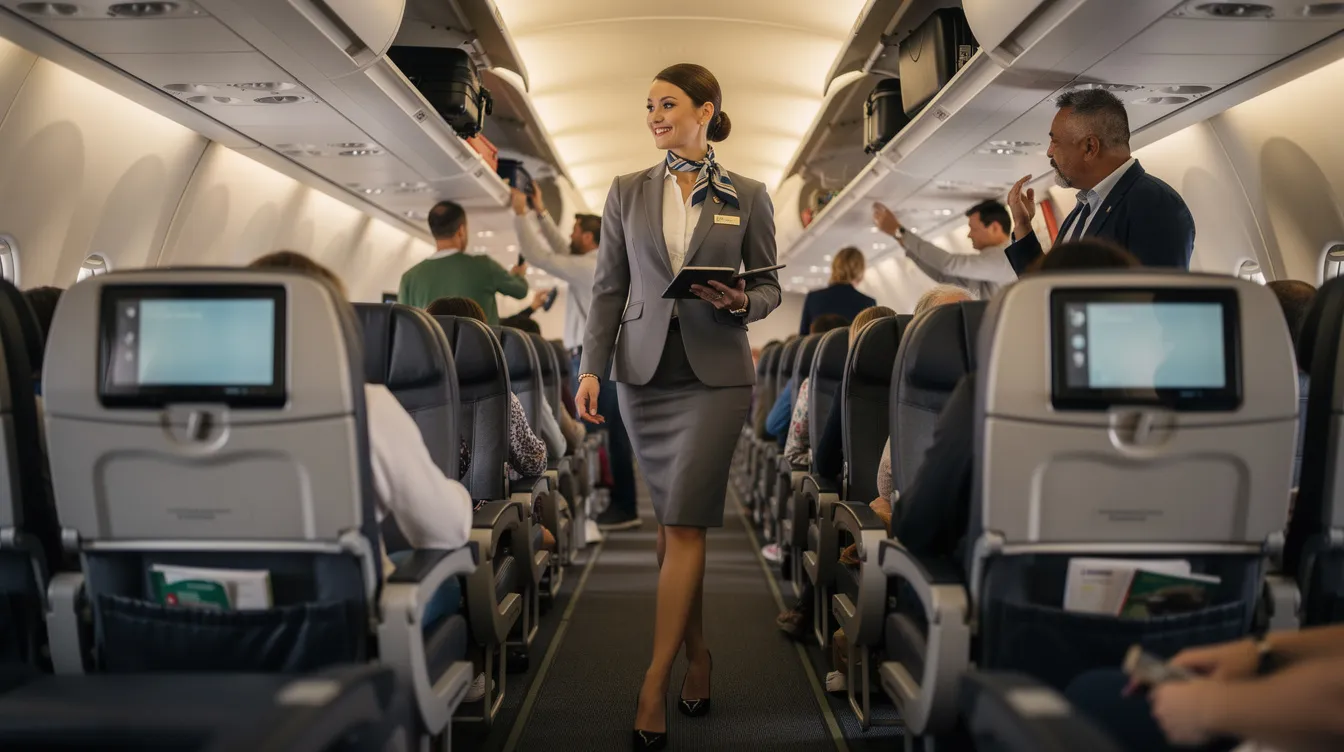
Starting Pay vs. Senior Flight Attendant Pay Scale
Seniority and Pay Progression
The gap between starting flight attendants and senior crew is dramatic. Here's how the pay scale typically progresses:
Years 0–2 (Entry-Level): Starting hourly wages for flight attendants range from $25 to $37 per flight hour. At United Airlines, the post-contract rate for new hires is $36.92 per flight hour. First-year flight attendants earn about $28,000 annually when factoring in reserve guarantees and limited flying. Initial training is unpaid or minimally compensated at many airlines.
Years 3–5 (Building Seniority): Rates climb to the $38–$50 range at mainline carriers. Schedule improves, with more domestic flights and occasional international trips. Annual salaries typically reach $50,000–$60,000.
Years 6–10 (Mid-Career): Hourly rates reach $50–$70. Line-holding becomes common, giving crew members control over route mix and schedule. Many flight attendants at this stage earn $60,000–$80,000.
Years 11+ (Senior): Senior flight attendants can earn $80,000 to $115,000 annually. Senior flight attendants can earn between $67 and $80+ per hour at major carriers. Delta's top-step rate at 12 years is $86.32 per flight hour. Under United's latest contract, the most senior crew can reach $100 per flight hour.
One critical detail: seniority does not transfer between airlines. A 15-year veteran who switches carriers restarts at Year 0 on the new pay scale—a significant financial reset.
Per Diem, Boarding Pay, and Hotel Accommodations
Per diem rates: Per diem is paid at roughly $2.25 per hour away from base, though it can range from $2.00 to $3.00 depending on airline and trip type. Southwest Airlines pays $3.04 per hour domestically and $3.63 internationally. Per diem covers meals and incidentals while away from base.
Trip example: A 4-day international trip with 85 hours away from base at $2.80 per hour yields roughly $238 in diem pay alone, adding $700–$800+ monthly for active schedules.
Boarding pay: Delta introduced boarding pay at 50% of the flight-hour rate for each leg's scheduled boarding time. United and American have followed with similar provisions in recent contracts.
Holiday pay: Holiday pay is typically 150% for six designated holidays, providing premium pay for crew who fly on those dates.
Hotel accommodations: Airlines provide hotel accommodations and ground transport on layovers at no cost to crew. During irregular operations, these provisions extend to cover delays and diversions. This isn't cash compensation, but it reduces out-of-pocket expenses significantly.
Flight attendants also receive additional compensation for overtime and premium trips, including red-eye premiums and high-demand holiday periods.
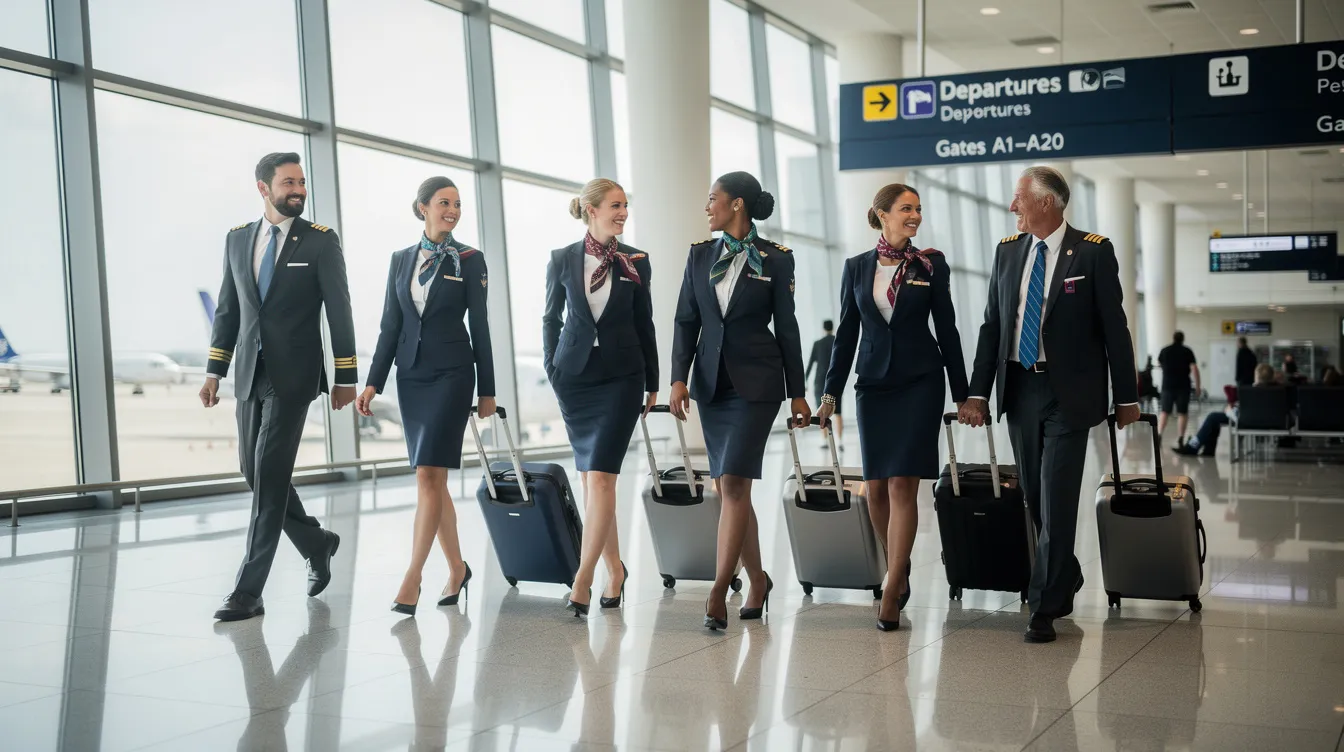
Reserve vs. Lineholder: How Schedule Affects Hourly Flight Attendant Pay
How much a flight attendant actually takes home depends heavily on whether they hold reserve status or a line.
Reserve status: New flight attendants typically start on reserve—on-call days where the airline assigns trips as needed. Most airlines guarantee 70–76 credit hours per month for reserves, ensuring baseline pay even during slow periods. The tradeoff: demanding schedules, irregular hours, limited control over destinations, and significant jet lag from unpredictable assignments.
Lineholder status: More senior crew bid on specific trips and build predictable monthly rosters. Lineholders can target higher-paying hours—international routes, premium cabin service assignments, and holiday flying—to maximize earnings.
Reserve example month: 76 guaranteed credit hours × $36/hour = $2,736 base pay + ~ $400 per diem + boarding pay = ~ $3,200 gross.
Lineholder example month: 90 credit hours × $55/hour = $4,950 base pay + ~ $550 per diem + boarding pay + lead premium = ~ $5,700 gross.
Seniority affects pay rates and schedule control for flight attendants—a dynamic that makes the first few years financially challenging. Both reserves and lineholders accumulate per diem from report to release, so even reserve days that result in trip assignments generate additional hourly compensation.
Commercial Airline Flight Attendant Pay vs. Private Jet Cabin Crew Pay
The pay structures between commercial aviation and private jet cabin crew diverge significantly. Commercial flight attendants at most airlines operate under union-negotiated contracts with defined hourly wages, per diem, and seniority steps. Private jet cabin crew career paths often involve different compensation models, training requirements, and service expectations tailored to ultra-high-net-worth travelers.
Many private jet cabin crew positions pay annual salaries or day rates rather than flight-hour rates. While entry-level private aviation roles may start lower than mainline commercial positions, compensation can vary depending on aircraft, operator, and service expectations, and experienced cabin crew on large-cabin aircraft—Gulfstream G650s, Bombardier Global 7500s—can command day rates that exceed commercial hourly rates when converted, reflecting bespoke service, security requirements, and flexible availability alongside similarly competitive private jet pilot salary ranges.
Commercial vs. Private Jet Cabin Crew Pay Structure Comparison
Feature | Commercial Airline Cabin Crew | Private Jet Cabin Crew |
|---|
Pay Structure | Hourly flight pay + per diem | Salary, day rate, or per-trip fee |
Schedule Control | Seniority-based, bid for lines/trips | More flexibility, less predictability, on-call |
Service Expectations | Serve 100–300+ passengers, standardized service | Serve 1–14 passengers, highly personalized |
Training & Safety | Standardized, union-negotiated, airline-specific | Specialized, aircraft-specific, Part 135 focus |
Compensation Range | $18–$100+/hour (flight time), $28k–$130k+ annually | $40k–$120k+ annually; day rates can exceed commercial equivalents |
Key differences include, and they parallel broader questions like how much a private jet pilot costs to employ and train:
Pay structure: Commercial = hourly flight pay + per diem; Private = salary, day rate, or per-trip fee
Schedule control: Private crews often have more flexibility but less predictability; many are on call for owner/charter schedules
Service expectations: Private cabin crew serve 1–14 passengers with highly personalized premium cabin service, versus commercial crews managing 100–300+ passengers
Training and safety focus: Private operators under Part 135 regulations require specialized safety and service training tailored to specific aircraft types and client profiles
Factors That Influence Flight Attendant Compensation
Flight attendant pay varies by airline policies and location. Several other factors drive how far apart annual salaries can be, similar to how private jet broker salary structures depend on performance, client base, and market segment:
Airline type: Major international airlines often pay more than regional carriers. A flight attendant at a legacy carrier may earn double what a regional airline crew member makes at the same experience level.
Seniority: Factors such as airline type and seniority influence pay rates for flight attendants. Each year of service unlocks higher steps on the pay scale.
Base city: Flight attendants based in high-cost cities like New York, San Francisco, or Los Angeles often receive higher pay rates or cost-of-living adjustments.
Route mix: International flights often yield higher pay than domestic routes, with additional per diem, layover time, and language premiums.
Union representation: Union representation can strengthen compensation packages for flight attendants through collective bargaining on hourly wages, work rules, and benefits like health insurance and profit sharing.
Aviation sales and brokerage roles: On the business side of aviation, roles in private jet sales compensation structures show how performance-based pay and commissions can drive earnings far beyond base salary.
Contract cycles: New contracts negotiated in the mid-2020s—particularly at United, Delta, and American—have pushed starting salaries and senior rates sharply upward.
Flight attendant wages vary significantly by location and country, with U.S. carriers generally paying more than carriers in many other regions around the world, though Gulf and Asian premium carriers offer competitive packages with different benefit structures.
Hourly Pay for Different Flight Attendant Roles and Seniority Levels
Not all cabin crew positions pay the same. Here's how roles and responsibilities map to hourly pay—and how they compare with compensation in premium private jet card programs like BlackJet:
Entry-Level / Reserve: $25–$37 per hour. Focused on safety duties, passenger service, and learning airline-specific procedures. Limited route selection.
Line Flight Attendant (3–6 years): $38–$55 per hour. Consistent schedule, broader route access, and growing proficiency in first class and premium service.
Senior Flight Attendant (7–10 years): The average hourly salary for senior flight attendants is $38.60 across all carriers, though at major airlines, senior crew earn considerably more—$55–$75 per hour. Senior flight attendants earn around $38.60 per hour on average, but this includes regional carriers that bring the figure down.
Lead flight attendant / In-Charge: $2–$5 per hour premium above base rate. Manages cabin crew, oversees service delivery, and handles safety briefings. Flight attendants can earn bonuses for lead or language-qualified roles, and those who transition to managing complex, large-group private jet operations for up to 50 passengers may see different pay structures entirely.
Purser / International Service Director: $80–$100+ per hour at major carriers by late-2020s contracts. Total compensation can reach $120,000–$140,000+ when combining base pay, premiums, and per diem on intensive long-haul schedules. Flight attendants earn more with supervisory responsibilities or language skills.
Many flight attendants who love flying pursue international purser roles specifically because the combination of hourly rate, per diem, and travel perks creates compelling total compensation despite health risks like jet lag and irregular hours.
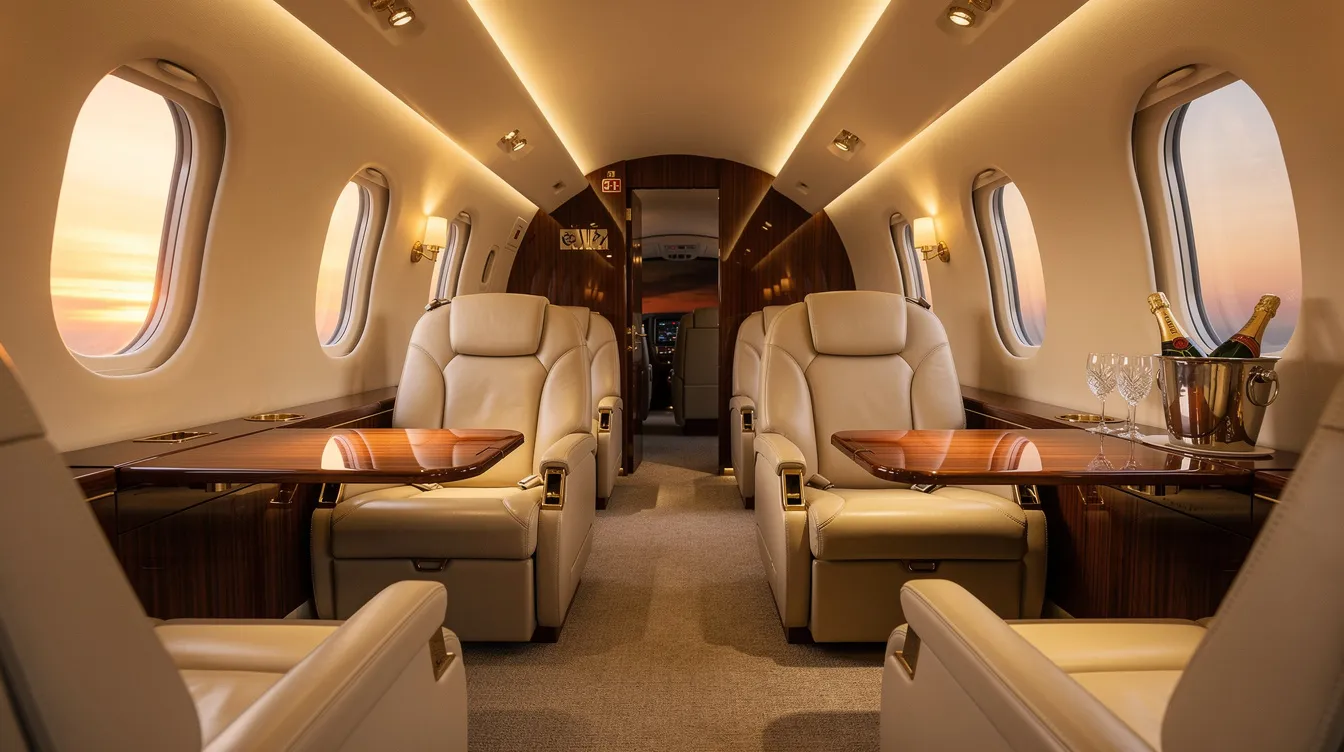
How BlackJet's Private Aviation Model Relates to Cabin Crew Pay and Experience
BlackJet operates as a premium private aviation access provider, offering Jet Card programs and its flagship BlackJet 25+ Hour Jet Card membership that prioritize safety, proprietary certification, and carbon-neutral operations. While BlackJet does not publish cabin crew pay scales directly, its partner operators employ cabin crew at rates reflecting highly specialized training, flexible scheduling, and the demands of serving discerning travelers on private aircraft.
The difference for BlackJet members is tangible. Rather than sharing a cabin with tens of thousands of passengers annually, our members experience crew members focused entirely on a small group—often just one to four travelers. This allows a level of service intensity that commercial flight attendants, no matter how skilled, simply cannot replicate in a 200-seat cabin, similar to the bespoke experience highlighted in our guide to chartering smaller private planes and their costs. That elevated service standard is reflected in how our partner operators compensate their crew.
BlackJet's technology platform—24/7 digital booking, real-time support, and operational oversight—further supports cabin crew with accurate manifests, catering specifications, and safety protocols that enhance every aspect of the in-flight experience and integrate seamlessly with transparent private jet price list structures that many clients use to plan their overall travel budgets.
FAQ: Flight Attendant Hourly Pay, Per Diem, and Private Jet Cabin Crew
How much do flight attendants get paid per hour on average?
The average hourly salary is approximately $29.52 per flight hour nationally. At major carriers with new contracts, starting pay ranges from $25 to $37 per hour, while senior crew earn $67–$100+ per hour.
Why isn't boarding time always paid?
Historically, most airlines defined paid time as door-close to door-open. Boarding pay is a recent contract addition—Delta, and United now offer it, but many regional carriers and some airlines still exclude it.
How much does per diem add to hourly pay?
Per diem typically adds $2.00–$3.00 per hour for every hour away from base. On active monthly schedules, this can add $600–$900+ to monthly gross income, which is an important consideration when comparing total crew costs to the broader private jet pilot cost and operating expenses on an aircraft.
Do private jet cabin crew get paid more per hour?
It depends on the role. Entry-level private aviation positions may pay less, but experienced crew on large-cabin jets often earn premium day rates that exceed commercial hourly equivalents. For a deeper look at career paths and expectations, see our guide to top private plane stewardess jobs and compensation alongside our article on how much airline attendants get paid.
Can flight attendants earn six figures?
Yes. Senior flight attendants at major carriers with 10+ years of seniority, flying international routes, can earn $100,000–$140,000+ annually when combining base pay, per diem, lead premiums, and profit sharing.
How does cabin crew pay fit into the cost of a BlackJet flight?
BlackJet's Jet Card pricing encompasses the full experience—including highly trained cabin crew, rigorous safety standards, and carbon-neutral operations. The investment reflects quality and exclusivity, not itemized crew wages, and is structured similarly to other Jet Card membership pricing models and detailed breakdowns like our guide to 100-hour Jet Card costs.
Conclusion: What Hourly Flight Attendant Pay Really Means for Travelers and Crew
Published hourly rates tell only part of the story. When you factor in per diem, boarding pay, hotel accommodations, travel perks, health insurance, and retirement benefits, the real value of flight attendant compensation extends well beyond the base hourly wage. Commercial flight attendants typically earn from the low $20s to $90+ per flight hour, with total annual salaries ranging roughly from $28,000 to over $120,000 depending on experience, airline, and route mix. Starting salaries may seem modest, but the trajectory—especially at major carriers with recent contract gains—rewards those who build seniority.
Understanding how cabin crew is compensated matters to travelers, too. It reflects the level of safety training, professionalism, and service quality behind every flight—whether you're seated in a full commercial cabin or in the intimate environment of a private aircraft. The crew shaping your experience represents tens of thousands of hours of training, demanding schedules, and specialized expertise.
For those who value that expertise delivered in its most refined form, explore how BlackJet's Jet Card membership offers a cabin experience shaped by highly trained crew, rigorous safety standards, and seamless, carbon-neutral private flights, supported by transparent Jet Card pricing guides, detailed analyses of Jet Card cost per hour, comparisons of 50-hour Jet Card pricing and value, overviews of NetJets Jet Card costs, roundups of the best Jet Cards for frequent flyers, and even strategies to maximize Jet Card tax deductions.


 Sign up with google
 Sign up with Apple