
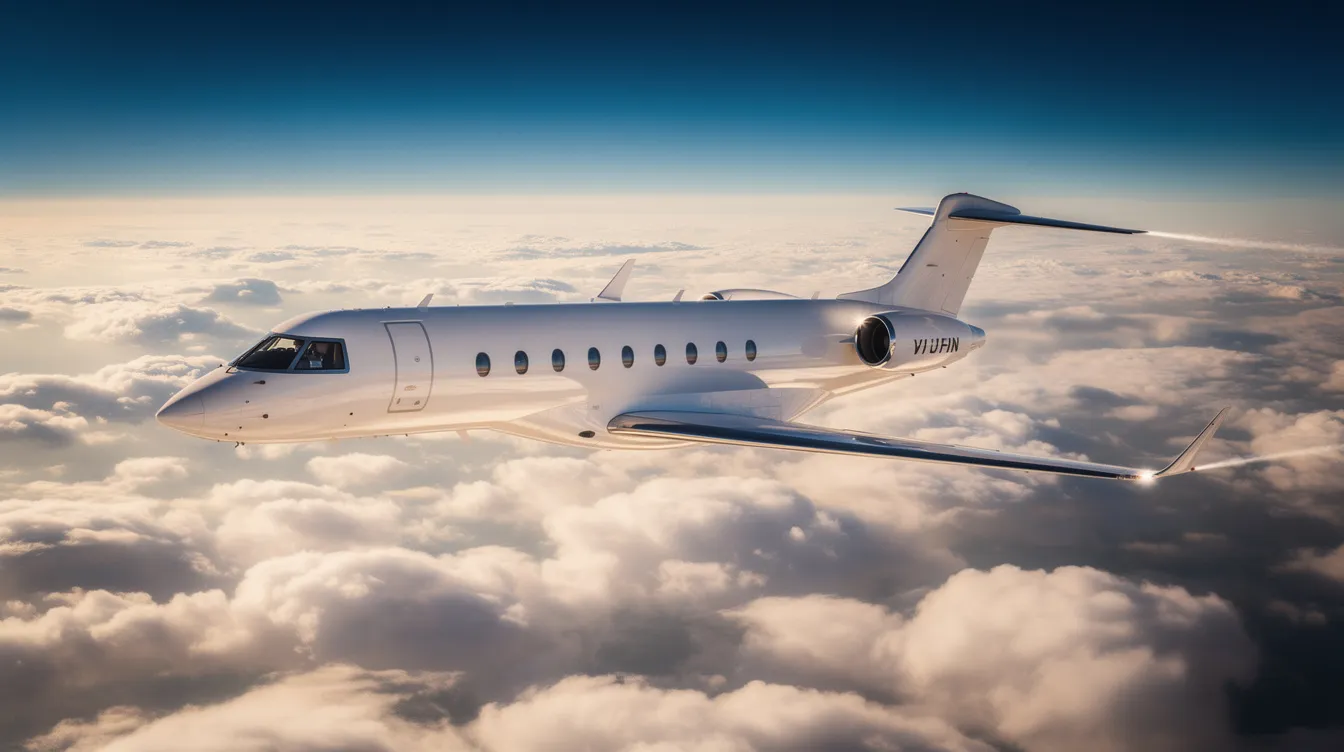
On November 1, 2026, a Learjet 60 carrying nine people crashed near Greenacres in Palm Beach County, South Florida, killing everyone on board. While this accident involved a Learjet 60, it shares many design and operational characteristics with the Learjet 30 series, a closely related family of business jets. The aircraft had departed Austin, Texas, bound for the Bahamas. What followed was one of the deadliest business aviation accidents in recent U.S. history — and an investigation that continues to reshape how the industry thinks about weather, structural integrity, and safety at altitude.
This article is intended for private aviation enthusiasts, industry professionals, and travelers interested in understanding the causes and implications of the Learjet 60 Florida crash, with context on the broader Learjet 30 series and private jet safety.
What we know so far about the Florida Learjet crash
The Learjet 60 crashed on November 1, 2026 — a Sunday afternoon — after departing Austin-Bergstrom International Airport en route to North Eleuthera International Airport in the Bahamas. All nine occupants of the aircraft were killed in the crash: two crew members and seven passengers, including two young children.
The plane crashed near Military Trail in Greenacres, creating a massive impact crater and scattering major wreckage across a debris field roughly half a mile by four-tenths of a mile. One person on the ground was injured by passing cars and debris. The crash occurred just before 1 p.m. local time, in a populated residential area of West Palm Beach.
This deadly Learjet crash is among the most significant U.S. business aviation accidents of 2026. The National Transportation Safety Board is leading the investigation under case ERA27MA026, with a final report expected in one to two years.
Detail | Information |
|---|---|
Date | November 1, 2026 |
Route | Austin, Texas, to North Eleuthera, Bahamas |
Aircraft | Learjet 60, registration N722BD |
On board | Nine people: two crew members and seven passengers |
Survivors | None |
Crash site | Near Military Trail, Palm Beach County, Florida |
Timeline of the Learjet 60's final flight
The airplane departed Austin-Bergstrom International Airport at approximately 10:37 a.m. Central Time on Sunday, climbing initially to FL410 (41,000 feet) before descending to cruise at 35,000 feet as it crossed into Florida airspace. While en route, the crew reported encountering light clear ice and moderate turbulence, with an outside air temperature near -47°C (-53°F). Moderate turbulence caused altitude deviations of approximately 700 feet as the aircraft struggled to maintain stable flight.
The pilots requested a climb to 37,000 feet seeking smoother air. Air traffic control cleared the climb. Moments after beginning the ascent, the crew declared a mayday call, reporting an overspeed condition and loss of control. The aircraft entered a steep, uncontrolled descent — initially at roughly 10,000 feet per minute, then accelerating. The Learjet 60 descended at over 20,000 feet per minute before reaching rates exceeding 30,000 feet per minute.
Flight tracking data confirms the aircraft descended 27,000 feet in one minute before radar contact was lost. Within moments of the Mayday, the sky above South Florida witnessed the final seconds of the jet's trajectory.
Flight detail | Reported information |
|---|---|
Cruise altitude | 35,000 feet |
Icing | Light clear ice reported at approximately -47°C (-53°F) |
Turbulence | Moderate, with altitude deviations of about 700 feet |
Descent | Approximately 27,000 feet in one minute |
Final communication | Mayday call; crew reported an overspeed condition and descent |
How icing and high-altitude weather can affect a Learjet 60
Icing remains one of the most dangerous weather conditions in aviation, particularly at flight levels between 30,000 and 40,000 feet where supercooled water droplets freeze on contact with aircraft surfaces. Icing can increase aircraft weight and drag while simultaneously causing a reduction in lift — a combination that narrows the margin between controlled flight and aerodynamic stall.
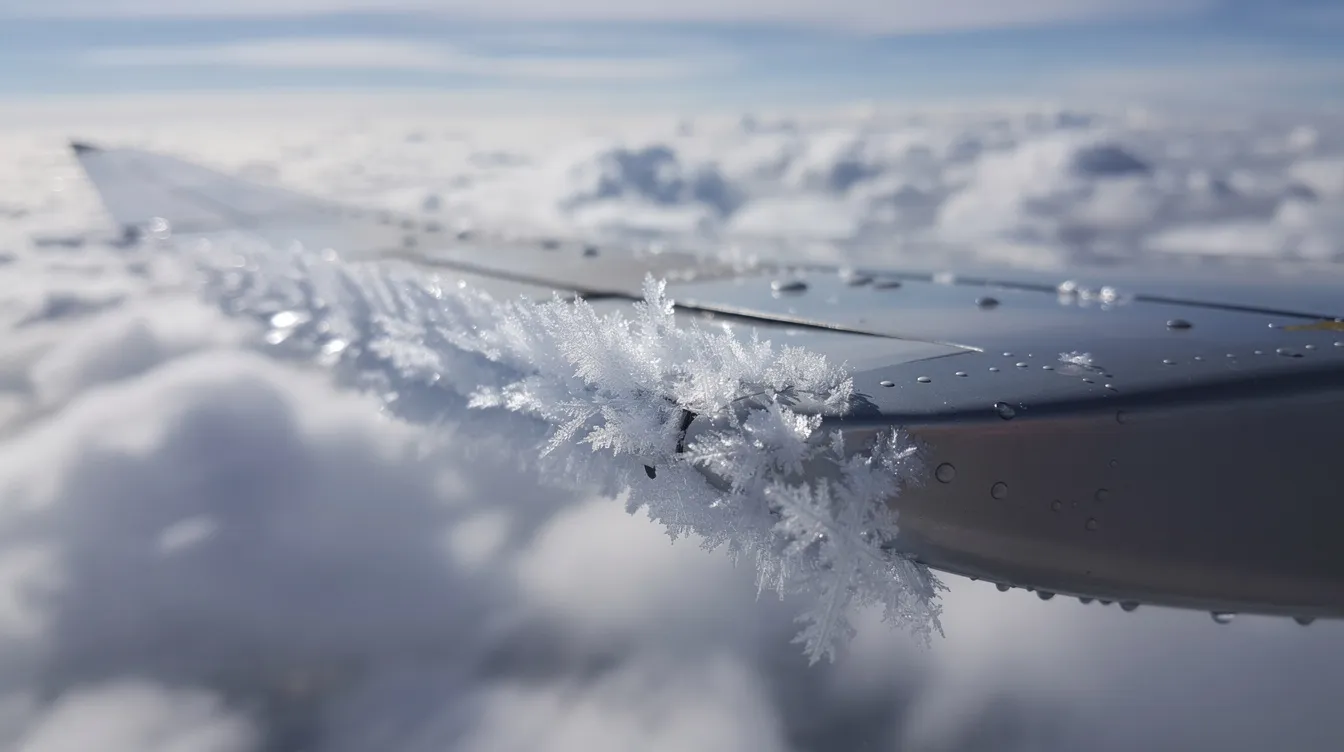
The Learjet 60 is not designed to handle significant ice buildup. Its anti-ice and de-ice systems are certified for typical icing encounters but can be overwhelmed in severe or mixed icing environments. Historical service bulletins for the Learjet 60 series have addressed horizontal stabilizer anti-ice wiring issues that could degrade ice protection if improperly maintained. Learjet wings are not designed for significant ice buildup, and the NTSB emphasizes risks of in-flight icing conditions for jets of this category.
To understand the broader Learjet family's design philosophy, the Learjet 30 series — a family of light twin-engine business jets — offers useful context. Key models include the Learjet 31, 35, and 36, all powered by Garrett TFE731 engines providing increased fuel efficiency. The aircraft series is popular for its proven performance and engineering, offering fighter-like climb rates and high cruise speeds. Production of the Learjet 31 began in 1987 and continued until 2003. The Learjet 30 series prioritizes speed and altitude over cabin comfort and baggage capacity, and both Learjet 35 and 36 models have iconic wingtip fuel tanks for extended range.
Weather conditions at altitude remain a major focus of this investigation. The crew reported icing at -47°C during flight, and weather radar showed areas of significant precipitation and convective activity along the route.
Aircraft, crew, and passengers on board
The aircraft was a Learjet 60, serial number MSN 60-271, manufactured in 2004. It was operated by Aurora Aviation under the Upper Jets brand, flying under Part 135 commercial charter regulations. The owner of record was LR60271 LLC, registered in Delaware.
The crew consisted of Captain Jeffrey Gregory and First Officer Nathalia Gadelha Filgueiras. Filgueiras, born in Florida to a Brazilian family, earned her pilot's license at age 17 and had accumulated over 1,300 flight hours. She was a graduate of American Flyers flight training.
The seven passengers included a tech entrepreneur, his spouse, their two young children (approximately ages 4 and 2), their nanny — identified as Anita Maria Cetina — and two family friends. The family had ties to companies including Robly and Retention.com and was traveling from Austin, Texas, to a vacation in the Bahamas, a route many families might otherwise cover by chartering a small private plane.
Impact site, Palm Beach County response, and immediate aftermath
The crash site near Military Trail in Palm Beach County was devastating. The plane struck near a roadway, creating a deep impact crater and scattering debris across homes, businesses, and rooftops. Burning wreckage blocked access to a nearby mobile home park, triggering immediate road closures and power outages.
Approximately 600 residents were evacuated to temporary shelters. Local authorities coordinated emergency housing, welfare checks, and relief efforts. Residents in the area described hearing and feeling a massive boom that shook structures throughout the neighborhood, a stark contrast to the carefully managed movements of large private jets for 30 passengers typically seen in organized group charter operations.
Inside the investigation: NTSB updates, flight data recorder, and expert analysis
The National Transportation Safety Board, supported by the FAA, is conducting the investigation. A preliminary report is typically released within 30 days, while the final report often requires one to two years. The NTSB is investigating weather as a potential crash factor alongside structural integrity, maintenance history, and crew decision-making.
Investigators recovered the cockpit voice recorder from the water-filled impact crater. However, the flight data recorder status remains uncertain — the NTSB has not confirmed whether it survived the breakup and post-impact fire. Without FDR data, investigators will rely heavily on CVR audio, ATC recordings, radar tracks, ADS-B flight data, dashcam footage, and physical wreckage analysis — evidence that also informs how operators structure private jet leasing and access models to prioritize safety.
A critical discovery: most of the left elevator was found in three separate pieces between 1.3 and 3.8 miles from the main crash site, suggesting in-flight structural failure. Whether the elevator separation was cause or effect of the uncontrolled descent remains one of the investigation's central questions.
A former fighter pilot and Navy aviator, Matthew Buckley, has publicly analyzed the NTSB updates, highlighting how Learjet 60 wing design and high-altitude icing can alter stall margins. These comments are analysis, not an official determination of cause; the NTSB investigation continues.
Public responses and calls for patience
Florida's governor called the event "cataclysmic." U.S. Secretary of Transportation Sean Duffy labeled it a "horrific tragedy" and pledged federal support through the FAA. NASA Administrator Jared Isaacman publicly defended First Officer Filgueiras against premature online criticism, urging the public to wait for factual findings before assigning blame. Flight instructors from American Flyers and former colleagues also spoke in support of her training and competence.
Safety lessons for private aviation and how BlackJet manages risk
This Florida Learjet crash raises hard questions for anyone who chooses to fly privately. How are operators vetted? How are weather decisions made? What standards govern the aircraft and crew you trust with your life — and whether chartering a private jet is worth it for your specific travel needs?
At BlackJet, safety is not a feature — it's the foundation. Every operator in our network undergoes rigorous vetting that exceeds regulatory minimums, including pilot experience requirements, aircraft maintenance verification, and BlackJet Certified standards for avionics, icing protection, and structural integrity. Partner operators use dedicated meteorology tools and maintain policies for avoiding known severe icing and convective storm cells, with authority to delay, reroute, or select another aircraft when conditions demand it.
A structured Jet Card program standardizes access and support across bookings. Unlike ad-hoc charter or fractional ownership, a Jet Card model such as BlackJet’s premium private jet programs offers prepaid access, digital booking, and 24/7 real-time operational support. Safety decisions remain with the operator and flight crew, who must be able to delay or reroute when conditions warrant.
While any Learjet crash prompts serious reflection, robust certification, ongoing NTSB learning, and disciplined operator selection meaningfully reduce risk. Private jet safety depends on the systems behind the flight, not just the aircraft itself.
FAQs: Learjet safety, NTSB investigations, and choosing safer private jet access
How safe is the Learjet 60 compared with other mid-size jets?
The Learjet 60 has a long operational history, though every aircraft type has limitations that must be considered alongside its service record, fleet hours, and operating conditions. The Learjet 30 series — including models such as the Learjet 31A, with a service ceiling of 51,000 feet and cruise speed of approximately 463 knots — demonstrates the platform's performance focus. The Learjet 31A is known for high-speed point-to-point transportation and short-field performance. High-altitude capability allows the Learjet 30 series to avoid commercial airline traffic. Learjet 30 series aircraft have lower acquisition costs compared with newer light jets and are used for corporate travel and medical evacuation.
What does the NTSB look at after a deadly Learjet crash?
Investigators examine weather conditions, maintenance records, pilot training and experience, aircraft design factors, operational decisions, and ATC communications. The board reviews these sources to establish probable cause. The NTSB has emphasized the risks of in-flight icing conditions for jets; its findings in this case remain pending.
What happens if a flight data recorder is destroyed?
When FDR data is unavailable, investigators can rely on the cockpit voice recorder, radar tracks, ATC audio, ADS-B data, witness accounts, and physical evidence from the crash site to reconstruct the aircraft's final moments.
What should private travelers ask about safety before booking a jet?
Ask about operator certification, such as ARGUS or Wyvern ratings, pilot experience requirements, aircraft age and maintenance history, weather decision-making authority, and whether the operator flies under Part 135 regulations. A Learjet 36 allows seating for up to six passengers due to its larger fuel tank, while the Learjet 35A has a maximum range of approximately 2,200 nautical miles. A typical Learjet 30 series cabin has club seating and measures about 4 ft 4 in high and 4 ft 11 in wide, so passengers cannot stand upright inside. Ownership of a Learjet 30 series aircraft typically requires a two-pilot crew; many travelers instead consider charter or Jet Cards.
How does BlackJet's Jet Card approach support safety and predictability?
BlackJet's Jet Card program offers standardized operator vetting, 24/7 operations support, technology-driven risk management, and carbon-neutral flights. Explore how BlackJet can reshape your travel at blackjet.com.
Conclusion: A lasting lesson in private aviation safety
The November 1, 2026 Learjet 60 crash remains under NTSB investigation, and its final cause has not been established. Reports of icing, turbulence, an extreme descent, and possible in-flight structural breakup are investigative clues — not a substitute for the board’s findings. The tragedy underscores why private jet safety, weather judgment, aircraft condition, crew training, and disciplined operational decisions must work together at every stage of a flight.
For travelers considering a Learjet 30 or another private aircraft, performance is only one part of the decision. Ask how an operator verifies maintenance and pilot qualifications, manages changing weather, and supports crews with clear authority to delay or reroute. A Jet Card can provide convenient, prepaid access without aircraft ownership, but the operator and BlackJet Certified safety standards behind each flight matter most. With careful vetting, certified partners, 24/7 real-time flight support, and carbon-neutral flights, private aviation can offer a more considered way to travel. Explore BlackJet’s Jet Card options to discover premium private jet access shaped around your needs.