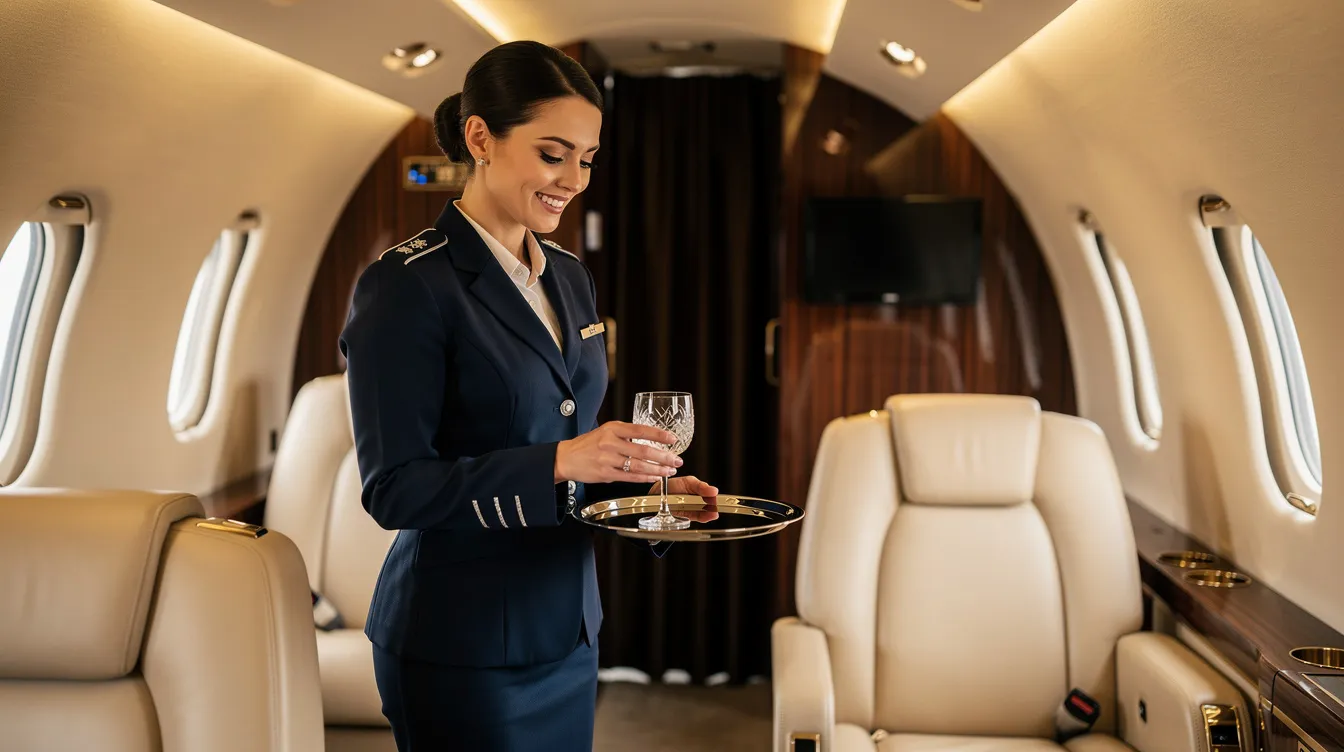
A VIP flight attendant on a private jet delivers personalized luxury service while also managing safety, emergencies, and discretion for every passenger on board. More than a cabin crew member, the flight attendant functions as a one-person luxury hotel, emergency department, and concierge rolled into a single professional. For executives and ultra-high-net-worth travelers who fly private, that role is what separates a pleasant trip from a forgettable one. This guide is for travelers, aviation professionals, and anyone interested in the world of private jet service. A VIP flight attendant works on private or charter jets and delivers highly personalized service for a small number of guests.
Whether you book private flights regularly, use a Jet Card provider such as BlackJet, or want to become a VIP flight attendant yourself, understanding this role explains what private aviation service actually demands. Below, you'll see how VIP flight attendants differ from commercial cabin crew, what they do before, during, and after a flight, which skills and qualifications matter, what the career path and lifestyle look like, and how aspiring candidates can apply for these jobs. In private aviation, where travelers expect flexibility, privacy, and high-touch service without compromising safety, the VIP flight attendant is central to the experience.
VIP Flight Attendant vs. Commercial Flight Attendant
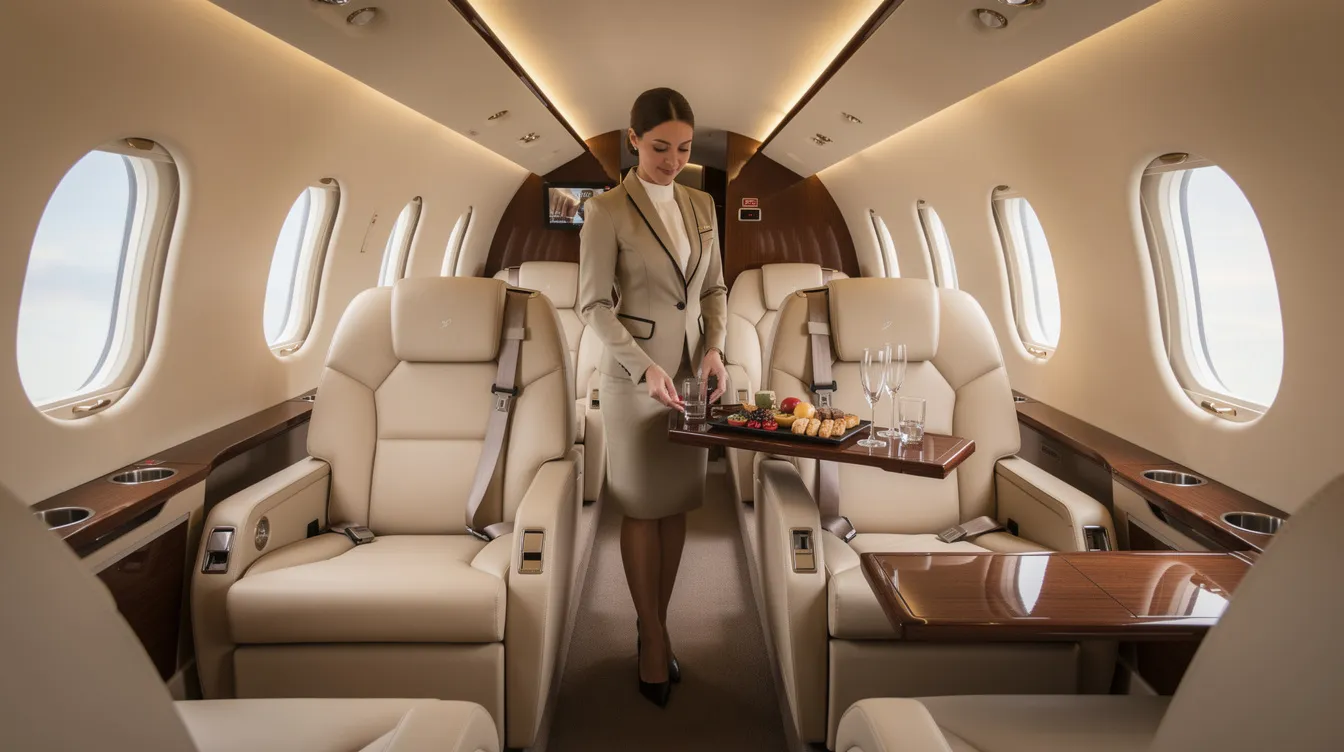
Regular flight attendants serve hundreds of passengers on commercial airlines with standardized service across set routes, fixed menus, and unionized rosters. A VIP flight attendant works on private or charter jets, delivering personalized service for a small number of guests, sometimes as few as one or two. VIP attendants often work alone or in pairs on private aircraft, handling everything from gourmet meal plating to emergency management without a team of six backing them up.
Private aviation eliminates queues, layovers, and rigid schedules. Flights depart from Fixed Base Operators (FBOs) rather than crowded terminals, and itineraries shift on short notice. The flight attendant's role adapts accordingly, shaped around client needs: instead of following a scripted trolley routine, they plan bespoke cabin layouts, source catering from a client's preferred restaurant, and adjust every detail to a single passenger's potentially varied needs.
The industry uses several terms interchangeably. "VIP flight attendant," "private jet flight attendant," and "cabin host" or "cabin hostess" all describe the same core function. "Cabin crew" appears in business aviation as well, though on smaller aircraft, the crew is often just one person responsible for the entire cabin.
What Does a VIP Flight Attendant Do on a Private Jet?
From the moment a client arrives at the FBO to baggage handover at the destination, the VIP flight attendant oversees all aspects of the passenger experience as the single point of contact for safety, comfort, and discretion. They manage everything from cabin preparation to passenger liaison roles, and the inflight service standard is closer to a Michelin-starred restaurant than to any commercial airline, all while operating within the rigorous safety standards of private jet travel.
Common responsibilities typically include:
Pre-flight duties:
Coordinate with ground handlers to confirm fuel, water, and aircraft readiness
Check catering against specific client profiles, including dietary needs and allergies; a VIP flight attendant is responsible for sourcing specialized high-end catering
Ensure the aircraft is fully stocked before take-off: premium beverages, barista-quality espresso supplies, linens, amenity kits
Perform safety checks on emergency equipment, oxygen systems, lighting, and cabin electronics
Set up bespoke cabin layouts: workspace configuration, bedding, entertainment
In-flight responsibilities:
Deliver a service experience custom-tailored to individual preferences and dietary needs: course-by-course dining, wine pairings, children's meals
Anticipate individual preferences rather than waiting to be asked; a returning client's favorite Bordeaux should already be chilled
Manage onboard safety and coordinate high-end logistics simultaneously
Maintain confidentiality during flights; discretion around documents, conversations, and identities is non-negotiable
Post-flight tasks:
Prepare the aircraft before and after trips: clean the galley, launder linens, restock supplies, and reset the plane
Capture feedback and document special preferences into a CRM so the next crew delivers the same standard
Handle customs or immigration paperwork for international legs
Example scenario: A BlackJet member boards at Teterboro, New Jersey, for an overnight flight to London Luton. The VIP flight attendant has pre-cooled the cabin, set out the member's preferred champagne, and arranged a light business supper. After dinner, the cabin converts to a sleep configuration with turn-down bedding and dimmed lighting. Confidential documents are secured. Breakfast is served on descent.

Key Skills and Qualifications of a Private Jet Flight Attendant
Most private flight attendant roles require three years of experience in premium commercial cabins, typically Business or First Class, plus dedicated business aviation training. Private flight attendants need at least three years of experience before most operators will consider an application.
Education and certification: Candidates must earn a high school diploma or GED as a minimum. Formal cabin crew certification (FAA-equivalent or EASA CCA) and valid medical and aviation security clearances are standard requirements.
Safety competencies: First aid and CPR certification are often required for applicants; in practice, first aid certification is essential for private flight attendants because they are the only medical responder on board. Skills include AED use, smoke and fire fighting, decompression handling, and emergency evacuation procedures specific to small-cabin aircraft.
Service skills: Culinary skills are valuable for VIP flight attendants, including fine dining and etiquette knowledge. Silver service technique, wine and spirits expertise, barista-level coffee preparation, and familiarity with dietary requirements (kosher, halal, vegan, low-FODMAP) are all expected. Luxury hospitality standards for VIP attendants are closer to five-star hotels than to airlines.
Soft skills: Discretion and confidentiality are essential skills for VIP flight attendants. Attention to detail is critical for private flight attendants across every task, from napkin folds to cabin temperature. Fluency in foreign languages is beneficial for private flight attendants; French, Arabic, and Mandarin are among the most requested. Experience in customer service is beneficial for applicants moving into this world.
Valued backgrounds: Luxury hotel or super-yacht service, high-end restaurant or concierge roles, and previous experience with security-sensitive clients all strengthen a candidacy.
Daily Life on Board: Service Experience, Safety & First Aid
Typical Day and Cabin Reset
A typical day might begin with a 6 AM departure from Van Nuys (KVNY) to Aspen, a short mountain hop, followed by a repositioning leg to Dallas for an evening transatlantic flight. Between sectors, the cabin must be reset, re-catered, and brought back to showroom condition. Sleep happens in a hotel near the FBO, if it happens at all. VIP flight attendants provide bespoke five-star hospitality to high-net-worth individuals on every leg, regardless of fatigue.
Personalized Service Details
The service experience is built around sensory details. A pre-departure welcome features the client's preferred champagne. Menus may be designed with a client's private chef or sourced from a specific restaurant. Playlists, cabin scent, temperature, and bedding choices are adjusted per passenger. Every aspect of the cabin environment reflects the passengers' potentially varied requests and moods.
Safety Routines and Emergency Management
Safety routines run in parallel. A discreet safety demonstration covers exit locations, life vests, and oxygen systems for that specific aircraft type. The flight attendant coordinates with pilots regarding turbulence forecasts and maintains constant situational awareness in a compact cabin. At 41,000 feet, a VIP flight attendant must remain calm under pressure and manage emergencies independently: dehydration, allergic reactions, fainting, chest-pain protocols. There is no doctor on board. The attendant must judge whether to request a medical diversion while administering care. Between all of this, high-touch surfaces are disinfected, the lavatory is maintained, and the cabin stays immaculate.
Emotional Intelligence on Board
Emotional intelligence is a key part of the job. Reading whether a passenger wants conversation or silence, adjusting interaction levels, and confidently yet politely enforcing seatbelt compliance with a CEO who would rather keep working requires a specific temperament.
Career Path: How to Become a VIP / Private Flight Attendant
The path typically moves from customer service into commercial cabin crew and then into private jets, often through networking and referrals rather than online job boards.
Complete secondary education. A high school diploma or equivalent is the baseline.
Build a luxury service experience. Work in five-star hotels, fine dining restaurants, or concierge roles. These positions develop the discipline and service instincts that private aviation demands.
Join a commercial airline. Two to three years in Business or First Class at Commercial Airlines is often used as preparation for private roles, building safety training foundations, high-end service flow, and crew coordination skills. Private flight attendant applications often require a resume update that reflects this experience.
Obtain certifications. Complete cabin crew safety and emergency procedures training. First aid certification, wet-drill exercises, and fire-fighting training must be renewed every one to three years.
Transition to private aviation. Apply to business jet operators, charter companies, or agencies that supply private jet flight attendants. Many operators favor referrals from trusted industry contacts.
Network at industry events. Attend EBACE in Geneva or NBAA-BACE in the U.S., join cabin crew associations, and connect with aircraft management companies and charter brokerages.
Upskill with specialized courses. Corporate service training, wine certifications, and etiquette programs help experienced commercial flight attendants stand out when seeking VIP positions, and stronger skills and reviews can improve pay over time.
Working with Jet Card Providers Like BlackJet
A Jet Card is a prepaid program granting fixed-rate access to private jets across multiple aircraft categories. BlackJet offers 25-hour and 50-hour programs that give members predictable pricing and priority availability, fitting within the broader landscape of Jet Card membership costs and benefits. For cabin crew, Jet Card programs create a different dynamic than ad-hoc charter work.
VIP flight attendants supporting Jet Card members maintain detailed, long-term preference profiles. Unlike one-off charter guests, a Jet Card member flies repeatedly, and the crew is expected to deliver consistent service across different aircraft types. The successful candidate in this environment works with the operations team and mobile booking platform to review passenger manifests, catering notes, and special instructions in real time before every flight.
Safety and certification standards are non-negotiable. BlackJet sources aircraft and cabin crew that meet strict industry audits such as ARG/US and IS-BAO. Every member flight is carbon neutral via verified carbon offsets, at no extra cost. When environmentally conscious clients ask about sustainability programs, the crew can speak to this directly and relate those answers to broader discussions about private jet pricing and access models or even more affordable private jet options for new travelers.
Concrete example: A BlackJet corporate member flies a team from Los Angeles to Chicago twice per month. The same small pool of VIP flight attendants handles those sectors. They remember seating preferences, tech workspace setup, and dietary details. Each flight plan draws on saved profiles, so the service feels personal from the first pour to the last handshake.
Compensation, Lifestyle, and Job Outlook in Private Aviation
VIP flight attendants' pay is strong, but demands flexibility. The Bureau of Labor Statistics reports a median annual salary of $67,130 for all U.S. flight attendants. Those in non-scheduled air transportation, which includes charter and private aviation, earned a median of roughly $77,060. In the UK market, private flight attendants earn between £50,000 and £100,000 annually, depending on operator, aircraft type, and schedule intensity, with benefits such as day rates, overnight allowances, and bonuses.
Lifestyle factors are real. Expect frequent international trips, nights away from home, and last-minute schedule changes. Peak travel periods around Davos, Art Basel Miami, Formula 1 races, and major holidays push workloads higher.
The job outlook for flight attendants is projected to grow by 30% by 2030. The Jet Card market was valued at $5.98 billion in 2025 and is projected to reach $10.41 billion by 2034. Over 1,000 VIP flight attendant jobs are available worldwide at any given time, and growth in both leisure and corporate private aviation continues to expand the hiring pool. For those interested in exploring Jet Card membership options, the industry's trajectory points to sustained demand, and many frequent flyers now compare the best Jet Cards for regular travelers, detailed 100-hour Jet Card cost guides, 50-hour Jet Card pricing overviews, specialized advice on maximizing Jet Card tax deductions, and breakdowns of NetJets Jet Card program costs before choosing a provider.
How to Stand Out When Applying for VIP Flight Attendant Roles
Private jet operators receive many applications. The ideal candidate sets themselves apart through precision, professionalism, and preparation.
Resume focus: Highlight Business or First Class experience, luxury hospitality roles, language skills, advanced first aid, and any specific private aviation training. List the aircraft types you have worked on. A good fit is someone whose resume reads like a blend of airline safety officer and boutique hotel concierge.
Portfolio elements: Include professional headshots in uniform, sample menus you have designed, evidence of wine or barista courses, and references from luxury employers. Photographs of table settings and cabin presentations carry more weight than generic uniform shots.
Interview preparation: Research the operator's safety philosophy and, where relevant, their organization and membership programs. Be ready to discuss realistic in-flight scenarios: "A guest requests a kosher meal two hours before departure. What do you do?" Knowing how a Jet Card provider like BlackJet operates shows the hiring team that you understand the business.
Discretion and social media: A clean online presence is non-negotiable. No posting from aircraft or tagging clients. Private flight attendants must demonstrate discretion with clients as a condition of hire, and NDAs are standard across the industry.
Tech literacy: Comfort with iPad-based service tools, digital flight briefs, and real-time communication platforms used by modern private aviation companies is expected. The world of private aviation runs on speed, and crew who can work independently with these tools deliver faster, smoother service.
Frequently Asked Questions (FAQs) About VIP Flight Attendants
Q1: What qualifications are required to become a VIP flight attendant?
A: Most VIP flight attendant roles require at least three years of experience in premium commercial cabins, a high school diploma or GED, first aid and CPR certification, and specialized training in luxury service and safety procedures.
Q2: How does a VIP flight attendant differ from a commercial flight attendant?
A: VIP flight attendants provide highly personalized, bespoke service to a small number of guests on private jets, often working alone or in pairs, while commercial attendants serve hundreds of passengers with standardized service on scheduled flights.
Q3: What are the typical responsibilities of a VIP flight attendant?
A: Responsibilities include preparing the aircraft before and after flights, managing onboard safety, delivering customized dining and service experiences, maintaining confidentiality, and handling emergencies independently.
Q4: What is the salary range for VIP flight attendants?
A: Salaries typically range from �350,000 to �3,100,000 annually, depending on experience, operator, and flight schedule, with additional benefits such as day rates and travel allowances.
Q5: How can someone apply for a VIP flight attendant position?
A: Candidates should build luxury service experience, gain commercial airline cabin crew experience, obtain necessary certifications, network within the private aviation industry, and prepare a resume highlighting relevant skills and experience.
Q6: Are foreign language skills important for VIP flight attendants?
A: Yes, fluency in foreign languages such as French, Arabic, or Mandarin is beneficial for communicating with international clients and enhancing service quality.
Q7: How do VIP flight attendants ensure passenger safety?
A: They perform safety checks, administer first aid if needed, manage emergency protocols, coordinate with pilots, and maintain situational awareness throughout the flight.
Q8: What role do VIP flight attendants play in sustainable private aviation?
A: VIP flight attendants support sustainability initiatives by helping communicate carbon-neutral flight programs to clients and ensuring environmentally conscious service practices.
Q9: Can VIP flight attendants work with Jet Card providers like BlackJet?
A: Yes, VIP flight attendants often support Jet Card members by maintaining detailed preference profiles and delivering consistent, high-quality service across multiple flights and aircraft.
Q10: What lifestyle should one expect as a VIP flight attendant?
A: The role involves frequent travel, flexible schedules, nights away from home, and working during peak travel seasons, requiring adaptability and stamina.
Conclusion: The Indispensable Role of VIP Flight Attendants in Private Aviation
VIP flight attendants are the cornerstone of the private jet experience, blending unparalleled luxury service with rigorous safety and discretion. Their unique skill set, combining hospitality excellence, emergency readiness, and personalized attention, ensures every journey meets the highest standards demanded by discerning travelers. Whether supporting Jet Card members on seamless, repeat trips or managing bespoke charters, these professionals elevate private aviation beyond transportation to a strategic advantage.
For travelers who value time, privacy, and flawless service, understanding the VIP flight attendant's role reveals why private jet access through providers like BlackJet offers not just convenience but a premier lifestyle choice. As the private aviation sector grows, so too does the demand for skilled VIP flight attendants, making this career path both dynamic and rewarding.
Explore how BlackJet's Jet Card programs integrate with expert cabin crew to reshape your travel experience. Discover a world where every detail is anticipated, safety is uncompromised, and luxury is standard. Join us in redefining private travel—where your journey is as exceptional as your destination.
Learn more about private jet safety and how our certified crews maintain the highest standards.
See how carbon-neutral flights contribute to sustainable luxury travel without compromising comfort or convenience.


 Sign up with google
 Sign up with Apple